Best Portable Ice Makers: How to Choose the Right Countertop Ice Maker for Your Needs
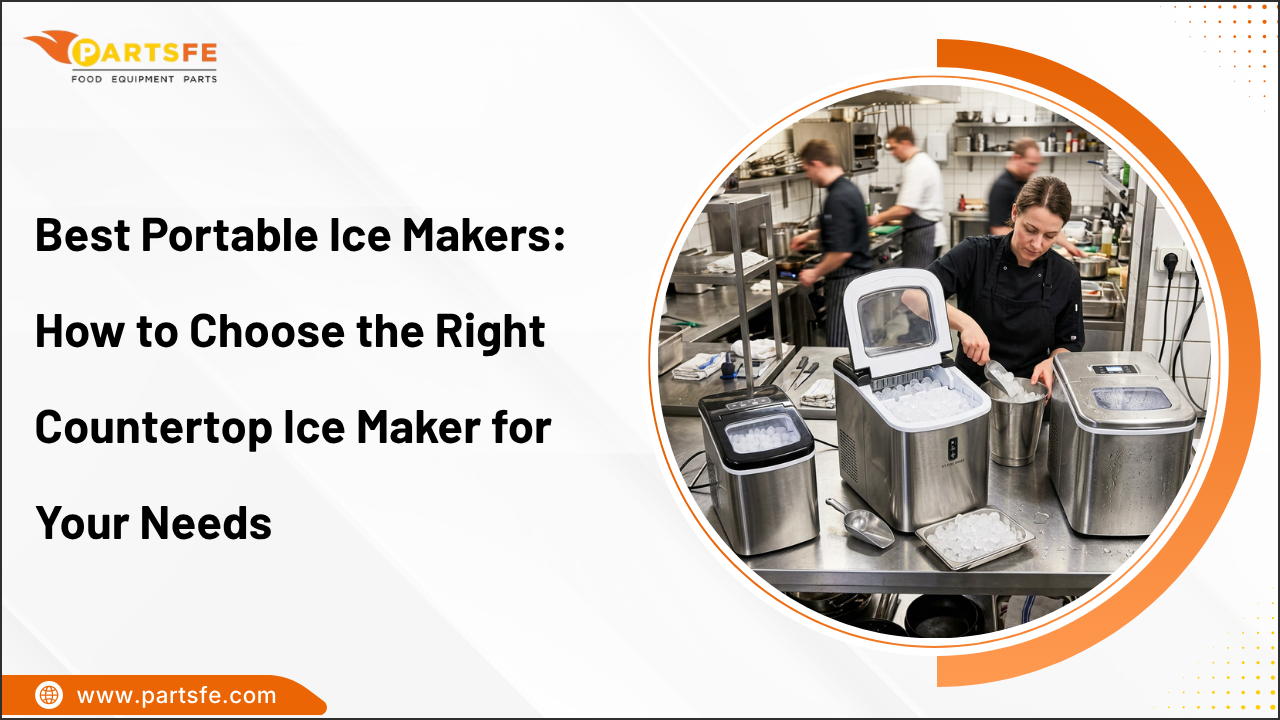
A portable ice maker can produce ice on demand without a permanent water connection or built-in freezer. For restaurant owners and foodservice operators, a countertop ice maker can be useful when you need additional ice for drinks, food presentation, catering, or peak service periods but have limited space or cannot install a full-size ice machine.
Choosing one means looking beyond the advertised ice output. You need to consider how much ice your operation uses, how quickly you need it, which ice shape suits your menu, how much water the unit holds, and whether its size fits your workspace. Cleaning requirements and ice storage capacity also affect day-to-day usability.
This guide explains the key features to compare, the differences between bullet, nugget, and clear ice, and how a portable ice maker makes everyday ice production more convenient for different restaurant needs, along with practical cleaning and maintenance considerations.
Table of Contents:
What Is a Portable Ice Maker and How Does It Work?
How to Choose the Best Portable Ice Maker: 7 Features to Compare
Bullet Ice vs Nugget Ice vs Clear Ice: Which Type Is Best?
What Is a Portable Ice Maker and How Does It Work?
A portable ice maker is a compact ice-producing unit designed to make ice without a permanent water connection. In commercial restaurants, cafés, bars, catering operations, food trucks, and small hospitality spaces, it can provide additional ice when countertop space, plumbing access, or installation options are limited. It is generally suited to supplemental or lower-volume ice production, rather than replacing a high-capacity commercial ice machine.
A portable ice maker typically works through these steps:
- Fill the Reservoir: Water is added to the built-in tank.
- Pump Water: A pump moves water to the refrigerated evaporator.
- Freeze Water: The evaporator removes heat from the water until ice forms.
- Release the Ice: The machine releases the finished ice into the collection basket.
- Repeat the Cycle: Production continues when water is available and the basket has space.
For restaurant use, production rate, ice type, cleaning requirements, and available storage capacity should be checked before selecting a unit.
Looking for replacement parts for your commercial ice machine? PartsFe offers quality restaurant equipment replacement parts. Find ice machine replacement parts such as water inlet valves, water pumps, filters, and defrost timers to support maintenance and repairs.
How to Choose the Best Portable Ice Maker: 7 Features to Compare
For a restaurant or foodservice business, choosing a portable ice maker starts with understanding where the ice will be used and how your staff will rely on the machine during service.
Here are the seven features to consider before selecting the best portable ice maker:
- Ice Production Capacity: Consider the machine's rated daily output against your actual demand. A unit rated at 20–40 lb of ice per day may suit lower-volume supplemental use, while higher-demand operations should consider greater production capacity.
- Production Cycle Time: Check the time required to produce one batch. Some portable units produce an initial batch in roughly 6–15 minutes, depending on the model and operating conditions.
- Ice Type: Bullet ice suits general drinks, nugget ice suits soft and chewable beverages, and clear ice suits presentation-focused cocktails and spirits. Confirm the ice type before purchasing.
- Water Reservoir Capacity: Check how much water the reservoir holds and how frequently staff will need to refill it.
- Ice Basket Capacity: Production and storage are different measurements. Check the basket capacity to determine how often staff will need to transfer finished ice.
- Countertop Dimensions: Measure the available counter space and allow the manufacturer's specified ventilation clearance.
- Cleaning and Drainage: Check for a self-cleaning cycle, accessible drain, removable basket, and accessible water-contact surfaces. Follow the manufacturer's cleaning instructions.
The best choice is the model that matches your ice application, workload, workspace, and operating routine. Evaluating these specifications together gives you a more practical basis for choosing a portable ice maker than relying on production capacity alone.
Bullet Ice vs Nugget Ice vs Clear Ice: Which Type Is Best?
Ice type affects more than appearance. Its shape, density, texture, and melting behaviour influence how it performs in a commercial beverage. Before choosing a portable ice maker, identify whether your operation needs ice for everyday drinks, chewable beverages, or presentation-focused service. The three common options below serve different applications.
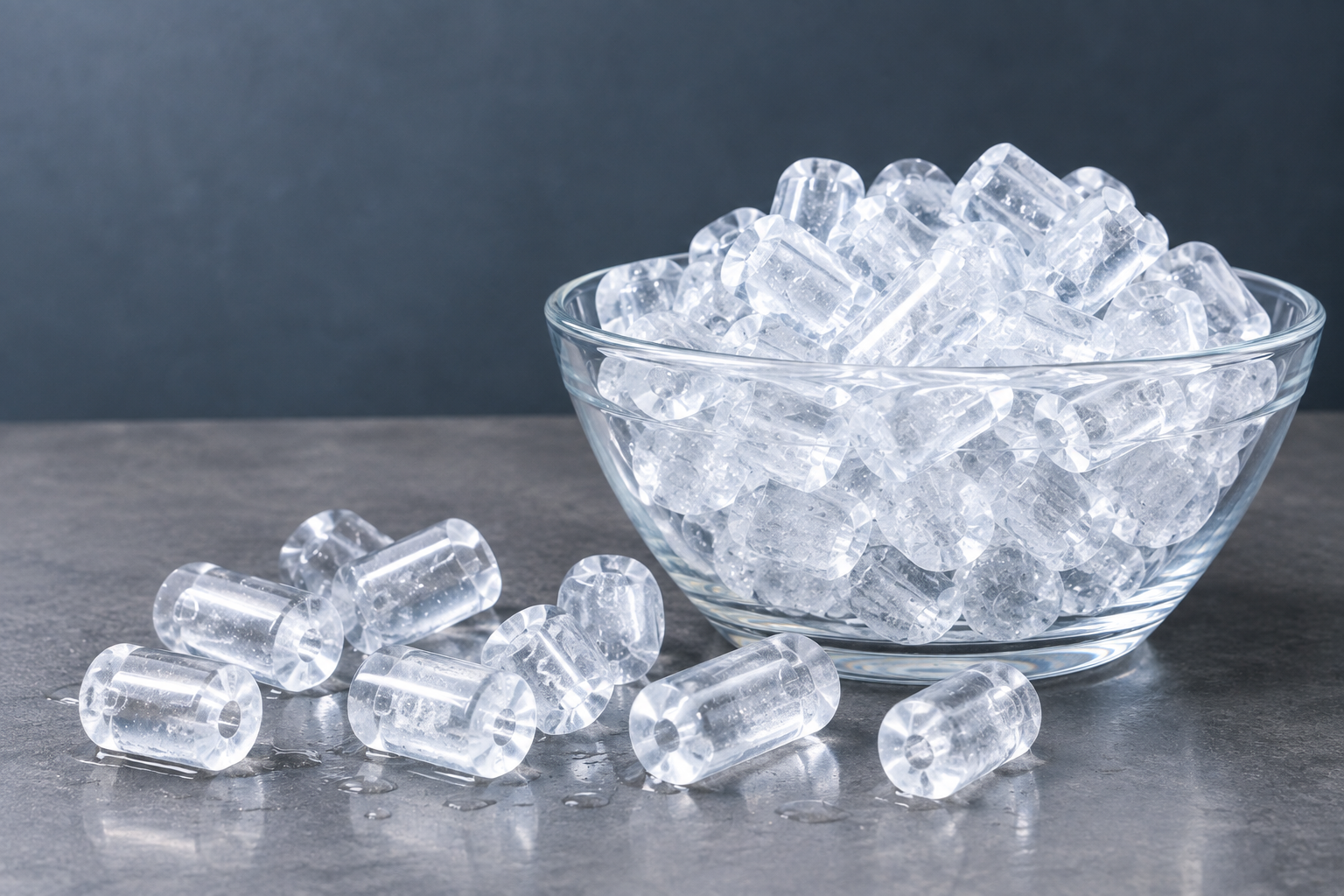
Bullet Ice: Bullet ice is typically cylindrical or rounded, with a hollow or partially hollow centre. Its shape provides good contact with beverages and makes it suitable for everyday cooling. It is a practical option for operations that need a versatile ice format across a broad beverage menu.
Best for: Soft drinks, iced tea, water, mixed drinks, and general restaurant beverage service.
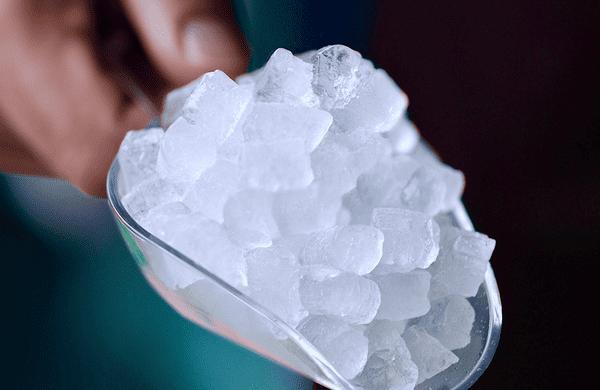
Nugget Ice: Nugget ice is produced from compressed ice flakes, creating a soft, porous, and chewable texture. Because it can absorb some of the beverage as it melts, the ice contributes to the drinking experience as well as cooling. It is particularly useful where customers prefer softer ice.
Best for: Fountain drinks, sodas, flavoured beverages, smoothies, and chewable-ice beverages.
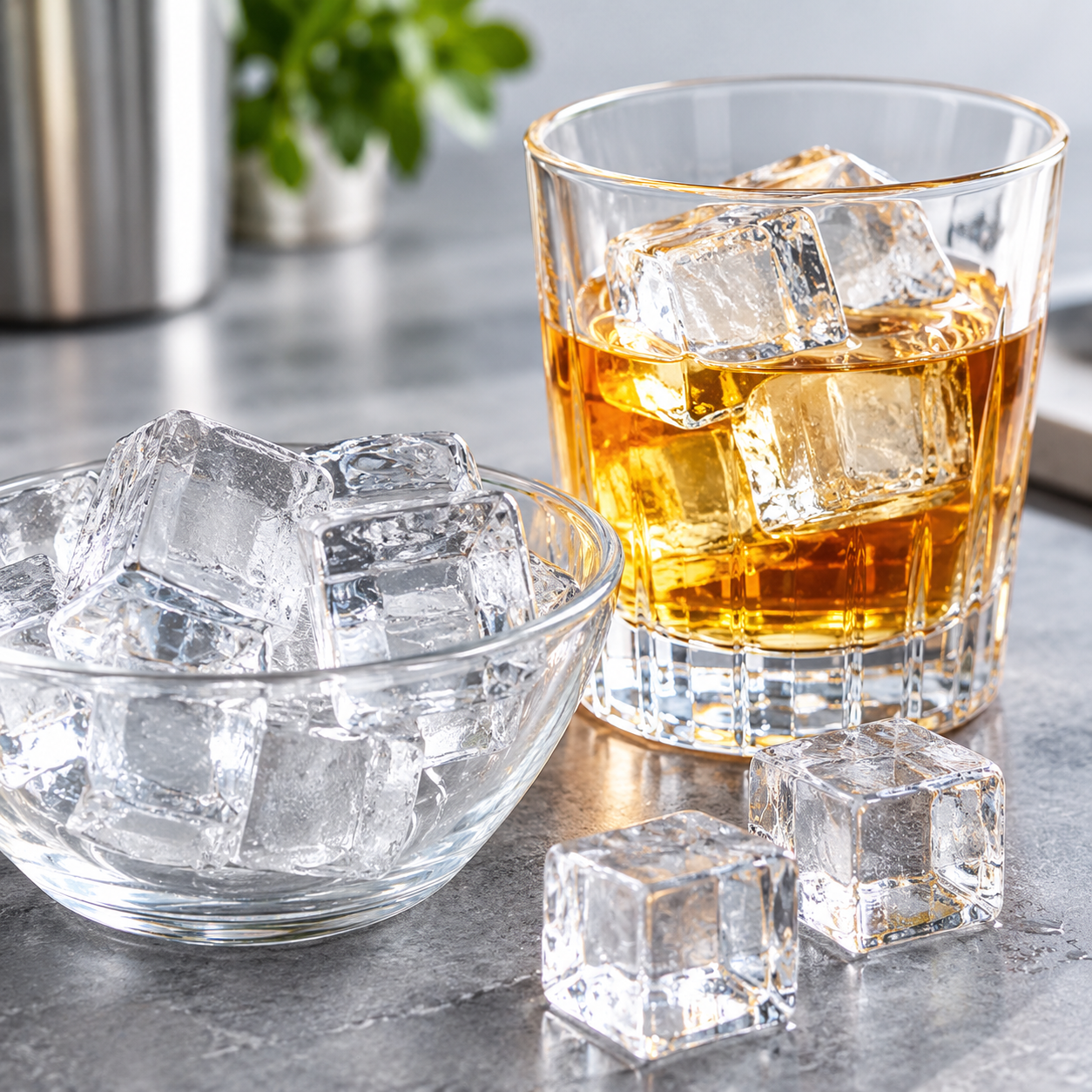
Clear Ice: Clear ice has a transparent appearance because fewer air bubbles and suspended impurities are trapped during freezing. Larger pieces can have a lower surface-area-to-volume ratio than smaller pieces, which may slow melting and help reduce dilution during service.
Best for: Whiskey, cocktails, spirits, premium mixed drinks, and presentation-focused beverage service.
Portable countertop ice makers are available in different designs that produce bullet, nugget, or clear ice. Most machines produce one specific type of ice, so choose a model based on your preferred ice texture, drink requirements, and available space.
Best Portable Ice Makers for Different Needs
The right portable ice maker depends on what your business needs the ice for and how the machine will be used during service. A café serving iced drinks may prioritise production speed, while a cocktail bar may care more about ice format and presentation.
The table below connects specific commercial needs with the features that matter most:
| Commercial need | Key specifications to prioritise | Recommended ice type | Example |
|---|---|---|---|
| Peak-hour backup ice | Short ice-making cycle, high stated daily output, adequate basket capacity | Bullet | A café supplements its main ice machine during busy periods. |
| Small café beverage service | Compact footprint, moderate production capacity, easy reservoir access | Bullet | Additional ice for iced coffee, cold drinks, and iced tea. |
| Food truck service | Compact dimensions, manageable water reservoir, simple drainage | Bullet or Nugget | A countertop unit where floor space and permanent plumbing are limited. |
| Soda and fountain drinks | Nugget production, sufficient batch capacity, easy ice dispensing | Nugget | Soft drinks where customers prefer chewable ice. |
| Cocktail service | Clear-ice capability, appropriate piece size, controlled production | Clear | Clear ice for whiskey and cocktails where the ice remains visible in the glass. |
| Small-scale catering | Portable construction, straightforward setup, suitable production rate | Bullet | Additional ice for private events. |
| Limited counter space | Compact dimensions and manufacturer-specified ventilation clearance | Depends on menu | A small bar measures counter space before choosing a unit. |
The best portable ice maker is application-specific. Match the machine's ice type, output, cycle time, capacity, dimensions, and operating requirements to the actual demands of your foodservice operation.
Portable Ice Maker Problems, Cleaning, and Maintenance Tips
In a commercial setting, portable ice maker problems are often linked to water supply, ice buildup, restricted airflow, dirty water-contact surfaces, or incorrect operation. Troubleshooting should address both equipment performance and sanitation.
Common Portable Ice Maker Problems
- Machine is Not Producing Ice: Check the water level, basket-full indicator, power supply, and operating controls.
- Ice Production is Slow: Check ventilation and whether ambient conditions are within the manufacturer's specified operating range.
- Ice is Smaller Than Expected: Check water level and circulation.
- Ice Has an Unusual Taste or Odour: Drain old water and clean the reservoir and ice-contact surfaces.
- Water is Leaking: Inspect the reservoir, drain, and visible connections for overfilling, blockages, or damage.
- Machine is Unusually Noisy: Check for an unstable surface, obstructions, or signs of pump or fan problems.
How to Clean a Portable Ice Maker
For commercial use, clean the machine according to the manufacturer's instructions and food-contact requirements:
- Switch off and unplug the ice maker before cleaning.
- Drain the water reservoir completely.
- Remove the ice basket and other removable components.
- Clean water-contact and ice-contact surfaces using the manufacturer's approved method.
- Rinse thoroughly where the cleaning procedure requires rinsing.
- Clean and inspect the drain area.
- Dry components before reassembling and returning the machine to service.
- Never use a cleaning chemical unless it is approved for the specific ice maker.
Portable Ice Maker Maintenance Tips
- Keep ventilation openings clear.
- Use suitable water as specified by the manufacturer.
- Do not leave stagnant water in the reservoir when the machine is not in use.
- Inspect for scale and residue on water-contact surfaces.
- Check for leaks around the reservoir and drainage points.
- Monitor ice size and production speed for changes from normal operation.
- Follow the manufacturer's cleaning and maintenance schedule.
- If the machine continues to malfunction, follow the manufacturer's service procedure.
Check out Manitowoc Ice Machine Cleaning Explained: Best Practices for Hygiene & Efficiency for cleaning and maintenance tips.
Summary: Selecting the Best Countertop Ice Maker for Your Space and Lifestyle
The best portable ice maker is the one that matches your operation's ice demand, beverage menu, available workspace, and cleaning routine. Compare ice production, cycle time, ice type, water reservoir capacity, basket capacity, dimensions, and maintenance requirements rather than relying on a single specification.
A small café may need a compact unit for supplemental beverage service, while a busy foodservice operation may require faster production and greater capacity. Before purchasing, confirm the machine's operating requirements and whether its capacity is appropriate for your expected workload.
Key Takeaways
- Compare daily ice production and basket capacity separately.
- Check cycle time if staff need ice at frequent intervals.
- Choose bullet, nugget, or clear ice based on your beverage applications.
- Measure available countertop space and ventilation clearance.
- Check water reservoir capacity and refilling frequency.
- Review cleaning procedures, drainage, and water-contact components.
- Clean the machine regularly to manage mineral buildup, residue, and odours.
- Keep ventilation openings unobstructed during operation.
- Follow the manufacturer's operating, cleaning, and maintenance instructions.
FAQs
How Long Does a Portable Ice Maker Take to Make Ice?
A portable ice maker can often produce its first batch of ice within about 6–15 minutes, depending on the model. Actual cycle time can vary with ice size, water temperature, ambient temperature, and machine operating conditions.
Does a Portable Ice Maker Need a Water Line?
No, most portable ice makers do not require a permanent water line. They use a built-in water reservoir that staff can fill manually.
Does a Portable Ice Maker Keep Ice Frozen?
Most portable ice makers are designed to produce and temporarily hold ice rather than maintain freezing temperatures for long-term storage. Ice in the basket can gradually melt.
How Much Ice Can a Countertop Ice Maker Make in a Day?
Daily ice production varies by model and operating conditions. Check the manufacturer's rated production conditions and basket capacity for commercial applications.
What Is the Difference Between a Portable Ice Maker and a Countertop Ice Maker?
The terms often describe the same type of appliance. “Portable” refers to a unit designed to be moved and operated without permanent installation, while “countertop” describes its compact form and intended placement.
|
Disclaimer: This blog provides general information about portable ice makers, their features, operation, cleaning, and maintenance. Product specifications, performance, and features may vary by manufacturer and model. |