How to Choose the Right Commercial Kitchen Temperature Probe for Your Equipment
A temperature probe is a small part with a big job. It tells your fryer when to heat, your oven when to stop, and your walk-in cooler when to run the compressor. When a probe drifts or fails, the equipment keeps running on bad information, and you find out through burnt food, weak ice production, or a cooler that sits above safe holding temperature.
Choosing a replacement is not as simple as matching a part number to a picture. Probe type, temperature range, resistance rating, and connector all need to match the equipment, or the control board reads the signal wrong. Getting these details right the first time saves you a second repair call and a second order.
This blog explains the main probe types, which one fits each kind of kitchen equipment, which specs to check before ordering, and when a probe is due for replacement.
Table of Contents
Why Does the Right Temperature Probe Matter in a Commercial Kitchen?
Types Of Temperature Probes Used in Commercial Kitchen Equipment
Matching the Right Probe to Fryers, Ovens, Griddles, Ice Machines, and Refrigeration
Specifications to Check Before Choosing a Replacement Probe
How Do You Know When a Temperature Probe Needs to Be Replaced?
Why Does the Right Temperature Probe Matter in a Commercial Kitchen?
Every heated or chilled appliance in your kitchen relies on its probe to make decisions. The control board cannot see the oil, the oven cavity, or the walk-in air, so a wrong signal means the equipment acts on wrong information. A drifting probe is often costlier than a dead one, since it keeps the unit running on bad numbers.
- Food safety: The FDA Food Code sets 41°F as the upper limit for cold-held food, and a walk-in probe that reads too cold can let food drift past it without any alarm.
- Food quality: A fryer running 25°F too hot burns product and breaks down oil faster, and an oven that reads off can leave baked goods underdone or dried out.
- Consistency: Cooks often adjust settings to compensate for a bad reading, which hides the real problem and makes results harder to repeat.
- Operating costs: Wasted oil, extra energy use, ruined batches, and added strain on compressors and heating elements all trace back to wrong readings.
- Downtime: Probes differ by type, resistance rating, temperature range, and connector, so a wrong match can mean a second repair visit and a second order.
Choosing the right probe the first time protects your food, your equipment, and your schedule. Matching the part to the equipment model number is the simplest way to get it right.
Types Of Temperature Probes Used in Commercial Kitchen Equipment
Most commercial kitchen equipment uses one of four sensing styles. They work differently, so one type cannot replace another without checking that it suits the equipment's control.
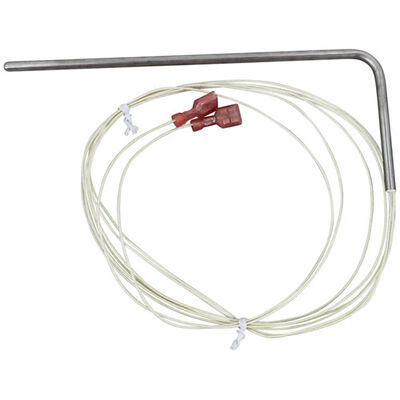
- Thermocouple probes: Two different metals joined at the tip produce a small voltage that changes with temperature. Type K is the most common, and thermocouples respond quickly, which suits gas appliances and high-heat areas.
- RTD probes: A platinum element whose resistance rises predictably as it heats up. Common types are Pt100 and Pt1000, and they are stable and accurate, which is why many ovens and electronic fryer controls use them.
- Thermistor probes: A semiconductor sensor whose resistance drops as temperature rises. They are very sensitive in the cold range, so they are common in ice machines and refrigeration.
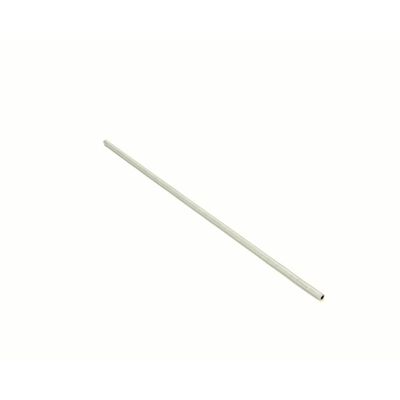
- Capillary bulb thermostats: A sealed bulb and thin tube filled with fluid or gas that moves a switch or gas valve. They have no electronics and are common on griddles and older equipment.
These sensing styles are built into different probe designs depending on what the equipment needs to measure:
- Surface temperature probes: Measure the temperature of a cooking or heating surface rather than the surrounding air. They are used on griddles, hot plates, and other equipment where surface temperature directly affects cooking performance.
- Food or immersion probes: Measure the internal temperature of food, liquids, or cooking products. They are useful in combi ovens, steamers, kettles, and food-holding applications.
- Air temperature probes: Monitor the temperature of the air inside an equipment cavity or cabinet. They are commonly used in convection ovens, proofers, holding cabinets, refrigerators, and freezers.
Knowing which type your equipment uses is the first step in choosing a replacement. The probe type, along with its resistance rating, connector, and probe design, must match what the control board expects.
Matching the Right Probe to Fryers, Ovens, Griddles, Ice Machines, and Refrigeration
Each machine measures heat in a different place and under different conditions, so each one uses the probe that suits those conditions. Knowing where the probe sits and what it has to withstand makes it clear which one fits.
| Equipment | Where the Probe Sits | Probe That Fits | Why This Probe Fits |
|---|---|---|---|
| Fryers | Directly in the cooking oil | Stainless steel RTD or thermostat probe, a high-limit probe, and a thermocouple for pilot safety on gas models | Reads oil temperature directly and reacts fast when cold product goes in, holding the 325°F to 375°F cooking range |
| Ovens | Inside the oven cavity, reading air temperature | RTD sensor on convection and combi ovens, thermocouple on many gas ovens | Stays accurate from about 150°F to 550°F, giving even baking and steady preheat times |
| Griddles and Grills | Against the cooking plate, usually underneath | Capillary bulb thermostat or electronic surface sensor | Reads the plate itself, not the air above it, so heat holds near 350°F to 400°F as cold food lands on it |
| Ice Machines | On or near the evaporator plate | Thermistor temperature probe | Very sensitive in the cold range, so the board knows when to start harvest and when the cycle is complete |
| Refrigeration | Air probe inside the box, defrost sensor on the evaporator coil | Cabinet air temperature probe or evaporator thermistor | The air probe keeps coolers near 35°F to 38°F and freezers near 0°F, and the defrost sensor tells the controller when the coil is clear of ice |
A probe works best when it suits the conditions of the machine it serves. Once you know which one your equipment uses, the specs in the next section help you confirm the exact replacement.
Specifications to Check Before Choosing a Replacement Probe
Two probes can look identical and still behave very differently once installed. Start with the equipment model and serial number, then find the original probe part number in the equipment documentation or parts information. Then compare the physical and electrical specs below, since these decide whether the control board reads the probe correctly.
- Equipment model and serial number: Confirms the probe is designed for your specific unit.
- Original part number: The most direct way to identify a compatible replacement.
- Probe type: The sensing technology must match what the control system expects.
- Resistance or electrical rating: Makes sure the control board receives the correct temperature signal. For example, a control built for a Pt100 will not read a Pt1000 correctly.
- Temperature range: Must cover the equipment's normal operating temperatures with some margin.
- Accuracy and response time: Affects how closely and how quickly the control follows real temperature changes.
- Probe length and diameter: Lets the sensor reach and fit the intended location.
- Sheath material: Protects the sensor from oil, steam, moisture, and cleaning chemicals.
- Cable length and insulation: Gives enough reach and withstands the heat near the equipment.
- Connector type: Must match the equipment's connection.
- Mounting method: Ensures the probe can be installed securely in its intended position.
When replacing an existing probe, compare the new one with the original and verify its specs before installation. Where possible, use the manufacturer's parts information to confirm compatibility, rather than relying on a probe that only looks similar.
Check out Thermocouples Explained: Types, Functions, Installation & Maintenance Guide for Commercial Equipment to learn how they work and how to maintain them.
How Do You Know When a Temperature Probe Needs to Be Replaced?
Temperature probes rarely fail all at once. Most drift slowly, so the equipment keeps running while the readings get less accurate. Spotting the early signs and confirming them with a quick test can save you from wasted product and unnecessary repairs.
Signs a temperature probe is failing:
- Readings that don’t match reality: The display is off by 10°F or more from a reliable handheld thermometer.
- Unstable temperatures: The temperature swings more than usual or jumps without a cause.
- Error codes: Repeated sensor or probe fault codes on the control.
- Food quality problems: Burnt, undercooked, or uneven results at normal settings.
- Equipment behavior changes: Long preheat times, a unit that runs constantly or will not heat or cool, thin or uneven ice from an ice machine, or a coil that keeps icing up.
- Physical damage: Corroded connectors, cracked or frayed wires, a bent sheath, or a kinked capillary tube.
How to Test a Temperature Probe Before Replacing It
Before testing a temperature probe, turn off the equipment and disconnect the power. If the equipment uses gas, shut off the gas supply as well, and allow the unit to cool completely. Follow these steps to check whether the probe is working correctly:
- Check the probe and wiring: Inspect the probe for physical damage, corrosion, loose connections, or damaged wires. Make sure the connector is clean and securely connected.
- Test in ice water: Place the probe in a properly prepared ice-water mixture. At sea level, the water should be close to 32°F (0°C). Check whether the probe reading is close to this value.
- Measure resistance: Disconnect the probe from the equipment and set a multimeter to the appropriate resistance setting. Measure the resistance across the probe terminals and compare the reading with the manufacturer's resistance chart for the measured temperature.
- Compare with a reference thermometer: Place the probe and a calibrated thermometer in the same location or test environment. Compare their readings to identify a significant difference.
- Check the results: If the probe reading or resistance falls outside the manufacturer's specified range, the probe may be faulty and should be replaced with a compatible part. If the probe tests correctly, check other possible causes such as wiring, connectors, or the control system.
A temperature probe that passes these checks is less likely to be the cause of the problem. If the readings are incorrect, replace the probe with a compatible part that matches the equipment specifications.
Check out How to Troubleshoot and Replace Commercial Fryer Thermocouples Like a Pro to learn how to spot a failing thermocouple, test it, and replace it safely.
Summary: What Should You Remember When Choosing a Temperature Probe?
A temperature probe is a small part that controls how your fryers, ovens, griddles, ice machines, and refrigeration units run. When it reads wrong, food quality, food safety, and energy use all suffer. Each machine uses a probe suited to where it sits and the conditions it faces, so the right choice starts with knowing your equipment.
Before ordering a replacement, match the probe type and check the specs against the original part or your equipment model. If readings drift, the equipment behaves oddly, or a quick test fails, it is time to replace the probe. Getting the right one the first time saves downtime and repeat orders.
Key Takeaways
- The probe sends the control the temperature it acts on, so a wrong reading means wrong operation.
- Each machine uses a different probe type, depending on what it measures and the conditions around it.
- Check the model number, original part number, resistance rating, temperature range, length, connector, and mounting before buying.
- Warning signs include readings that do not match a reliable thermometer, unstable temperatures, error codes, and poor food or ice quality.
- Test the probe in an ice water bath or with a multimeter before replacing it.
- Compare the new probe with the original, or confirm it with the manufacturer's parts information.
Looking for a replacement temperature probe for your fryer, oven, griddle, ice machine, or refrigeration unit? PartsFe carries OEM replacement parts for commercial kitchen equipment. Find temperature probes such as fryer temperature probes, oven temperature probes, ice machine thermistor sensors, and more to keep your kitchen equipment running accurately and reliably.
References:
https://www.fda.gov/media/181882/download
https://www.dwyeromega.com/en-gb/resources/temperature-probes
FAQs
Is a high-limit probe the same as a cooking probe?
No. The cooking probe controls normal operating temperature, while the high-limit is a safety device that cuts power if the temperature climbs too high. Many fryers use both.
Can a bad temperature probe cause food safety problems?
Yes. A probe that reads too cold can let cold-held food rise above 41°F, and one that reads too hot can leave food undercooked. Verify readings with a calibrated thermometer.
Can a faulty probe make equipment overheat or stop heating?
Yes. The control acts on the probe's signal, so a wrong reading can cause overheating, weak heating, constant running, or short cycling. Test the probe before replacing costlier parts.
Disclaimer: This blog is for informational purposes only and provides general guidance on commercial kitchen temperature probes. Always confirm compatibility with your equipment's manufacturer before replacing any part.