Beyond POS: How Intelligent Cooking Platforms Like iCombi Pro and iHexagon Are Driving Restaurant Innovation
Restaurant technology has evolved far beyond traditional point-of-sale systems. While POS platforms continue to streamline ordering and payment processes, modern restaurants are increasingly investing in technologies that improve efficiency, consistency, and productivity inside the kitchen.
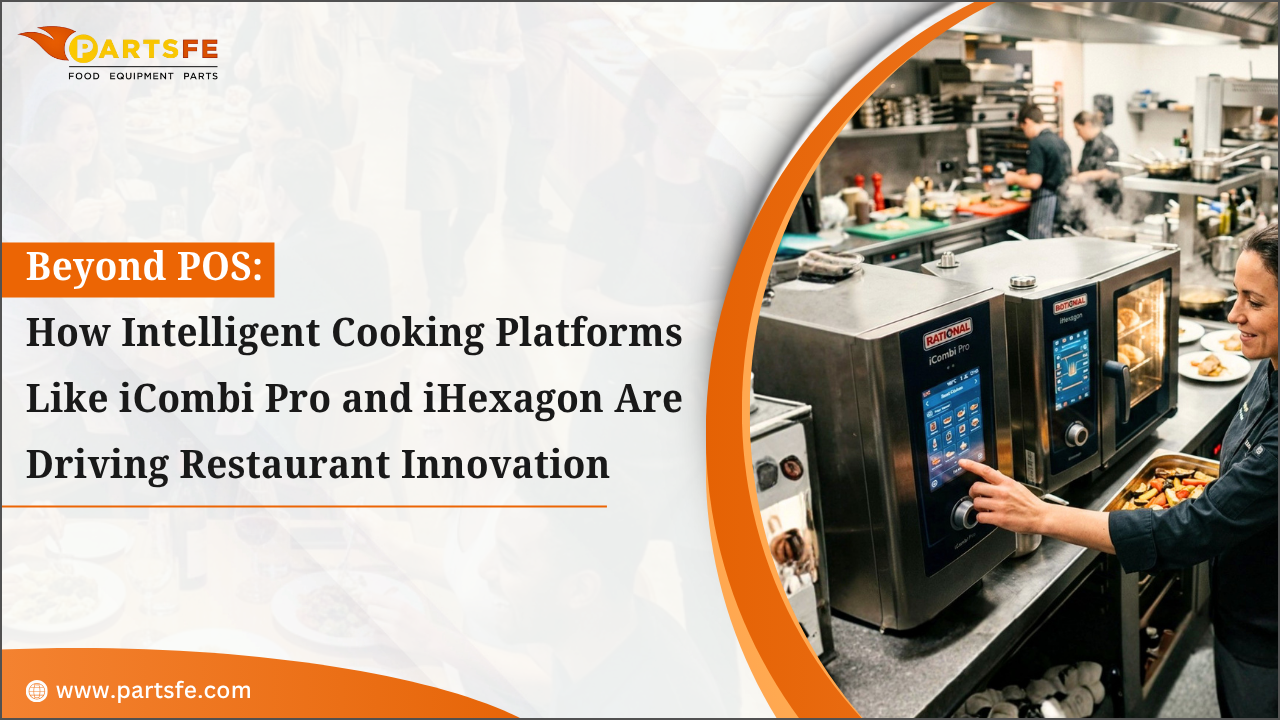
Intelligent cooking platforms such as iCombi Pro and iHexagon are leading this shift by combining automation, sensor-based controls, and data-driven cooking processes. These systems help kitchens maintain food quality, optimize workflows, and reduce dependence on manual monitoring during busy service periods.
This blog explores how intelligent cooking platforms are transforming commercial kitchen operations beyond traditional POS systems.
The Evolution of Restaurant Technology Beyond Traditional POS Systems
Restaurant technology has moved beyond simple order-taking and payment systems to become a core part of how kitchens operate. While POS systems improved front-end efficiency, modern tools are now focused on improving cooking processes, consistency, and overall kitchen performance.
This evolution can be understood through the following key developments:
-
POS systems streamlined transactions: Improved order accuracy, payment processing, and sales reporting.
-
Kitchen automation gained importance: Smart equipment now helps reduce manual tasks and improve workflow efficiency.
-
Digital recipe management emerged: Standardized cooking programs help maintain consistent food quality across shifts and locations.
-
Connected kitchen systems expanded: Equipment can share data and provide real-time operational insights.
-
Data-driven decision-making has increased: Restaurants use performance data to optimize production, reduce waste, and improve resource utilization.
As a result, restaurant technology is no longer limited to managing orders and payments; it now plays a direct role in how efficiently and consistently food is produced in the kitchen.
How iCombi Pro and iHexagon Are Transforming Modern Kitchen Operations
Modern kitchens are moving from manual cooking control to automated systems that regulate heat, humidity, and timing with minimal supervision. Equipment like the Rational iCombi Pro and Rational iHexagon automatically adjusts cooking conditions in real time based on food type and load size, helping maintain consistent results even during busy service periods.
Real-Time Cooking Adaptation
Adjusts cooking conditions dynamically based on food and load.
-
Detects product type and chamber conditions during cooking
-
Automatically adjusts temperature, humidity, and airflow
-
Maintains consistent results even with varying batch sizes
Ensures stable output during peak service without manual corrections.
Multi-Function Cooking Integration
Combines multiple cooking methods within a single system.
-
Supports steaming, roasting, baking, and finishing in one unit
-
Eliminates the need to transfer food between equipment
-
Reduces kitchen clutter and equipment dependency
Helps streamline workflow and improve station efficiency.
Reduced Operator Dependency
Minimizes the need for constant manual monitoring.
-
Automated cooking cycles run with minimal supervision
-
Staff focus shifts from monitoring to preparation and plating
-
Reduces pressure on kitchen teams during rush hours
Improves labor efficiency and reduces operational stress.
Standardized Output Across Shifts
Ensures consistent cooking results regardless of the operator.
-
Digital recipes control cooking parameters precisely
-
Eliminates variation between different staff members
-
Maintains quality consistency across service periods
Strengthens food consistency and brand reliability across kitchens.
Overall, these systems transform kitchen operations by replacing manual control with intelligent automation, improving consistency, efficiency, and productivity across commercial foodservice environments.
Key Smart Features That Improve Cooking Precision and Automation
Intelligent cooking platforms use automation and sensor technology to improve cooking accuracy, reduce manual intervention, and maintain consistent food quality. These features help kitchens streamline operations while minimizing errors and variability between batches.
The following table outlines the key smart features and their role in improving precision, efficiency, and consistency in commercial kitchens.
|
Feature |
Function |
Operational Benefit |
|
Automated Recipe Programs |
Stores preset cooking parameters for menu items |
Ensures consistent results regardless of the operator |
|
Core Temperature Probes |
Monitors internal food temperature in real time |
Prevents undercooking and overcooking |
|
Intelligent Climate Control |
Adjusts humidity, heat, and airflow automatically |
Maintains consistent texture and product quality |
|
Multi-Stage Cooking Sequences |
Executes different cooking phases automatically |
Reduces manual handling and supervision |
|
Load Detection Technology |
Adapts settings based on batch size |
Maintains performance across varying production volumes |
|
Self-Cleaning Programs |
Automates cleaning and maintenance cycles |
Reduces labor requirements and downtime |
|
Performance Monitoring |
Tracks cooking activity and equipment usage |
Supports operational optimization and consistency |
These features work together to reduce manual intervention, improve cooking precision, and ensure stable, repeatable results across different shifts and kitchen workloads.
Driving Restaurant Innovation with Connected and Data-Driven Kitchens
Modern commercial kitchens using intelligent cooking equipment such as the Rational iCombi Pro and Rational iHexagon generate operational data during every cooking cycle, including chamber temperature changes, humidity levels, cooking duration, and energy consumption patterns.
This data is captured automatically by built-in sensors and stored within the system to track performance at a granular level, rather than relying on manual observation by kitchen staff.
-
Cycle-level performance logging: Records exact cooking time, temperature curves, and humidity adjustments for each batch
-
Equipment load behavior tracking: Identifies how performance changes between full loads, partial loads, and peak-hour usage
-
Error and deviation detection: Flags inconsistencies when actual cooking conditions differ from programmed recipes
-
Multi-location standardization data: Allows replicated cooking programs across different kitchen sites with identical output parameters
-
Energy consumption measurement: Tracks power and water usage per cooking cycle to identify high-cost operations
These systems turn cooking into measurable data, helping operators reduce inefficiencies, standardize output, and make decisions based on real usage data.
Summary: Smart Cooking Platforms Driving Restaurant Innovation
Modern kitchens are moving beyond traditional POS systems toward intelligent cooking platforms that improve consistency and efficiency in food preparation. Equipment such as the Rational iCombi Pro and Rational iHexagon uses sensors and automated controls to regulate key cooking conditions like temperature, humidity, and timing in real time.
These systems also capture operational data from every cooking cycle, including performance and energy usage. This helps restaurants monitor efficiency, standardize cooking across locations, and make more accurate operational decisions based on real usage data.
Key Takeaways
-
Intelligent cooking platforms automate cooking conditions for consistent results
-
Real-time sensor control reduces manual supervision
-
Systems generate data on performance, energy use, and cycle behavior
-
Data insights improve efficiency and reduce operational waste
-
Standardized programs ensure consistent output across locations
Looking for high-quality restaurant equipment parts? PartsFe offers a wide range of replacement parts to keep your restaurant running smoothly and efficiently. Find durable parts for ovens, fryers, grills, and other commercial kitchen equipment to ensure reliable performance and long-lasting efficiency.
References:
https://www.rational-online.com/en_us/ihexagon/
https://www.rational-online.com/en_us/combi-ovens/
https://www.rational-online.com/en_us/icombi-pro/
FAQs
What benefits do smart cooking systems provide to restaurants?
They improve consistency, reduce waste, save energy, and provide operational data that helps optimize kitchen efficiency and overall restaurant performance.
Do smart cooking systems reduce labor requirements?
Yes, automation handles cooking adjustments and monitoring, reducing manual supervision and allowing staff to focus on preparation and service tasks.
How do smart cooking systems help with data tracking?
They record cooking cycles, temperature patterns, and energy usage, helping restaurants analyze performance and improve operational efficiency.
|
Disclaimer: This blog is for informational purposes only and is intended to provide general information about intelligent cooking platforms and commercial kitchen technologies. |