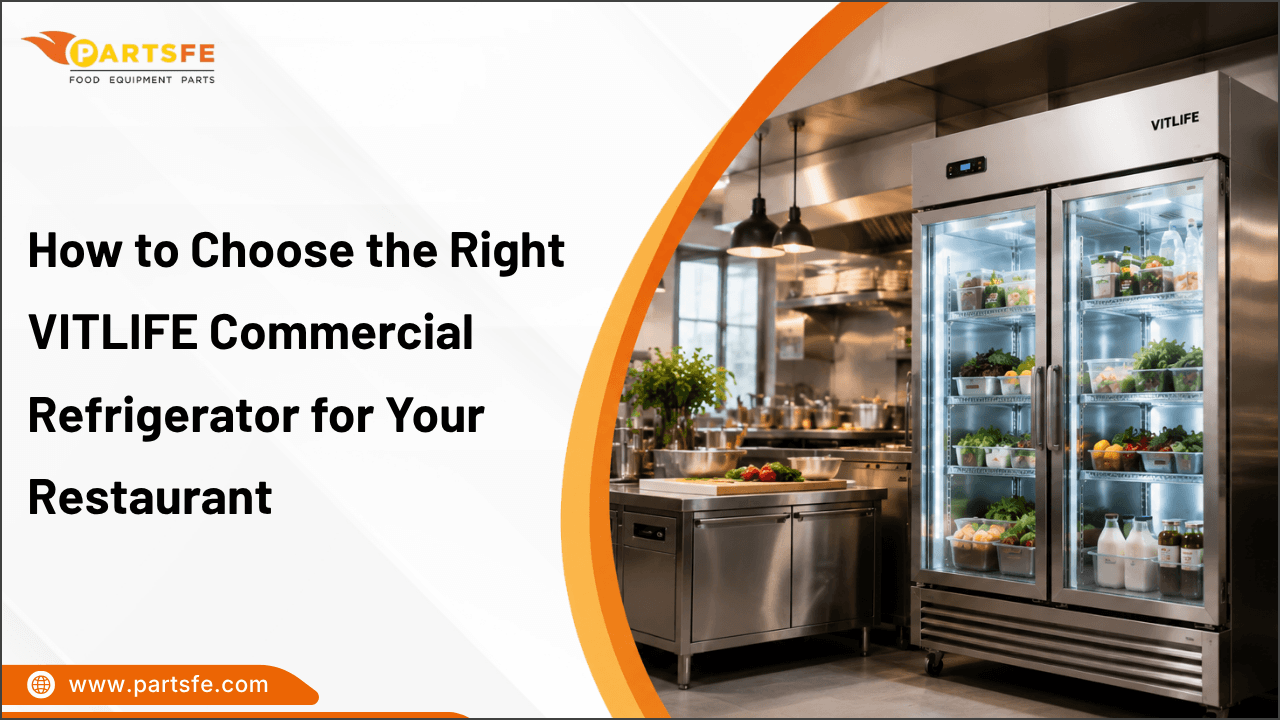
How to Choose the Right VITLIFE Commercial Refrigerator for Your Restaurant
The right VITLIFE commercial refrigerator depends on your restaurant's storage capacity, available kitchen space, food-storage requirements, workflow, and preferred refrigerator configuration. Refrigeration affects food storage, kitchen organization, food safety, employee workflow, energy consumption, and long-term operating costs.
With different commercial refrigeration configurations available, restaurant owners need to consider more than size or purchase price. The right unit should offer adequate storage capacity, maintain consistent temperatures, and fit the available kitchen space. A VITLIFE commercial refrigerator helps restaurants streamline kitchen operations with organized storage and easy ingredient access. It should also suit the way employees prepare, store, and serve food.
This guide explains the key factors to consider when choosing a VITLIFE commercial refrigerator, from capacity and configuration to energy efficiency, maintenance, and long-term value.
What are the Factors to Consider When Choosing a VITLIFE Commercial Refrigerator
When choosing a VITLIFE commercial refrigerator, evaluate storage capacity, refrigerator configuration, available kitchen space, temperature requirements, construction quality, energy efficiency, and maintenance needs. The best choice is the model that matches your restaurant's daily inventory volume and workflow.
Determine Your Refrigerated Storage Capacity
Begin by estimating how much food and beverage inventory your restaurant needs to refrigerate during both normal and peak operations.
Consider:
- Fresh produce
- Meat and poultry
- Dairy products
- Prepared foods
- Sauces and condiments
- Beverages
- Desserts
- Prepped ingredients
Look at both refrigerator capacity and usable shelf space. A refrigerator that is too small can become overcrowded, making organization and airflow more difficult. However, an oversized refrigerator can consume unnecessary floor space and increase the initial investment.
The goal is to choose enough capacity for your restaurant's realistic inventory without paying for unused storage.
Select the Appropriate Refrigerator Configuration
Different restaurant operations require different types of refrigeration.
-
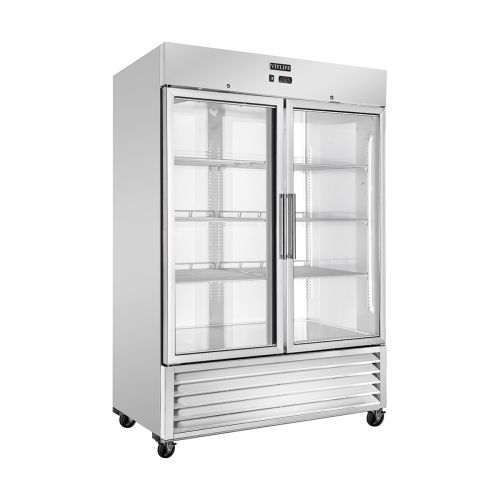
A reach-in refrigerator is generally suitable for centralized food storage and frequent employee access.
-
An undercounter refrigerator can place ingredients close to a preparation station while conserving floor space.
-
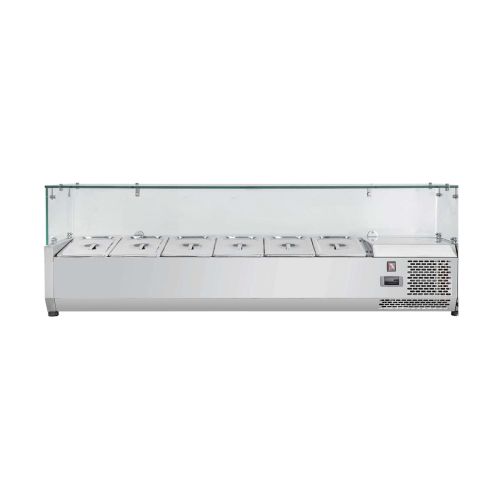
Restaurants that prepare sandwiches, salads, pizzas, or similar foods may benefit from a prep refrigerator that combines refrigerated storage with food-preparation functionality.
-
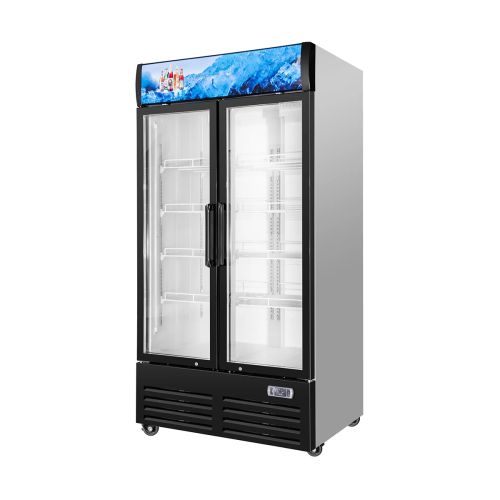
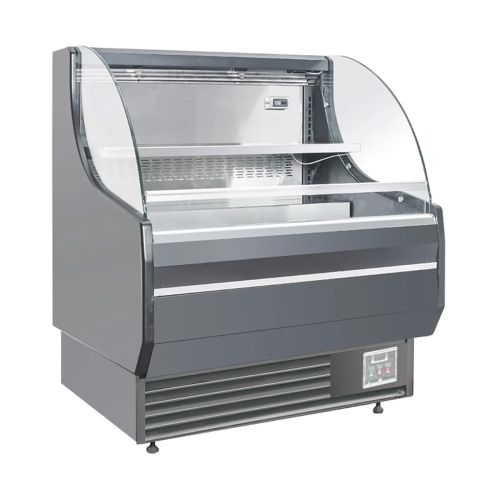
For beverage-focused or customer-facing applications, glass-door refrigerators and merchandising refrigerators can provide convenient product visibility.
Measure Your Available Kitchen Space
Before purchasing, measure the area where the refrigerator will be installed.
Check:
- Width
- Depth
- Height
- Door-opening clearance
- Employee access space
- Delivery route
- Electrical outlet location
- Required installation clearance
Remember that the refrigerator needs enough surrounding space for employees to work safely and for service personnel to access equipment when maintenance is required.
Check Temperature Requirements
Temperature range is one of the most important specifications when selecting commercial refrigeration equipment. Choose a refrigerator designed for the type of food and beverages you intend to store. Compare the manufacturer's stated operating range, temperature controls, defrost system, and cooling configuration.
Do not assume that every commercial refrigerator operates at the same temperature. Always verify the specifications of the exact model and follow applicable food-safety requirements.
Evaluate Construction and Durability
Restaurant refrigeration equipment must withstand frequent opening, closing, cleaning, loading, and unloading. Look for durable stainless steel commercial refrigeration construction, strong shelving, reliable door hardware, and components designed for commercial foodservice environments.
Also consider whether the refrigerator has features such as:
- Adjustable shelves
- Heavy-duty casters
- Self-closing doors
- LED interior lighting
- Electronic temperature controls
- Durable door gaskets
These features can improve everyday usability and make the refrigerator easier to integrate into a busy kitchen.
Consider Energy Efficiency
Commercial refrigerators operate for long periods, making energy consumption an important part of ownership cost. When comparing VITLIFE models, evaluate features such as energy-efficient refrigeration, efficient fan motors, LED lighting, automatic defrost, door sealing, and temperature management.
Energy efficiency should be considered alongside purchase price. A refrigerator with a slightly higher initial cost may provide better long-term value if it uses energy efficiently and supports reliable operation.
VITLIFE Commercial Refrigerator Types: Which One Fits Your Restaurant?
Understanding the major types of commercial refrigerators can help you select the right configuration for your operation.
Reach-In Refrigerators
A commercial reach-in refrigerator is designed for convenient access to refrigerated inventory.
These units are suitable for restaurants that need centralized storage for ingredients and prepared foods. Their vertical design can provide substantial storage without requiring as much floor area as some horizontal configurations.
Consider a reach-in refrigerator when your priority is:
- Large refrigerated inventory
- Easy employee access
- Organized shelf storage
- Centralized food storage
Undercounter Refrigerators
An undercounter commercial refrigerator is designed to fit beneath a countertop or preparation surface.
This configuration is particularly useful in compact kitchens and food-preparation areas where employees need frequent access to refrigerated ingredients.
Undercounter refrigeration can help restaurants maximize available floor space while keeping essential ingredients close to the point of use.
Sandwich and Salad Prep Refrigerators
A sandwich prep refrigerator or salad prep refrigerator combines refrigerated ingredient storage with a preparation surface and ingredient-access area.
These units can be useful for:
- Sandwich shops
- Cafés
- Delis
- Pizza restaurants
- Salad bars
- Quick-service restaurants
The main advantage is workflow efficiency: employees can access refrigerated ingredients while assembling food without repeatedly walking to a separate refrigerator.
Glass-Door Refrigerators
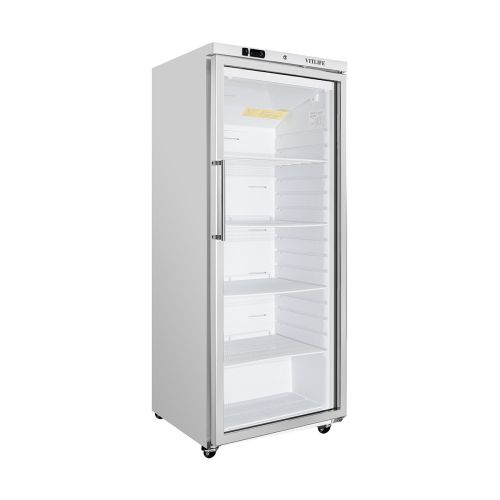
A glass-door commercial refrigerator provides refrigerated storage while allowing employees or customers to see the contents.
These units can be particularly useful for beverage stations, cafés, grab-and-go food service, convenience-style operations, and customer-facing displays.
Merchandising Refrigerators
A commercial merchandiser refrigerator is designed primarily around product visibility and presentation.
If your restaurant sells packaged beverages, desserts, prepared foods, or other refrigerated products directly to customers, a glass-door merchandiser can
support both storage and product presentation.
Key VITLIFE Commercial Refrigerator Features to Compare
Once you identify the appropriate refrigerator configuration, compare the features that affect daily performance.
-
Adjustable Shelving: Adjustable refrigerator shelves allow employees to organize different-sized containers, food pans, bottles, and packaged products. Flexible shelving can also make inventory rotation easier.
-
Temperature Controls: Electronic temperature controls can provide convenient management of the refrigerator's operating temperature. Accessible controls are especially useful in busy kitchens where employees need to monitor and manage refrigeration equipment regularly.
-
Automatic Defrost: Automatic defrost can reduce the need for manual defrosting and help maintain consistent refrigeration performance. However, automatic defrost does not eliminate the need for routine cleaning and maintenance.
-
LED Lighting: LED interior lighting makes it easier to locate ingredients and identify products quickly. This can be particularly useful for glass-door refrigerators and merchandising equipment where visibility is an important part of the operation.
-
Self-Closing Doors: Self-closing doors can help prevent unnecessary cold-air loss when employees access the refrigerator repeatedly throughout the day. A refrigerator door that remains open for extended periods can affect internal temperature and increase refrigeration workload.
-
Refrigeration System Placement: Commercial refrigerators may use different refrigeration configurations, including top-mounted, bottom-mounted, or rear-mounted systems. The placement can affect installation considerations, cleaning access, airflow, and the refrigerator's relationship with the surrounding kitchen environment.
-
Mobility: Heavy-duty casters can make commercial refrigeration equipment easier to move for cleaning, maintenance, or kitchen reconfiguration. Always follow the manufacturer's instructions when moving or repositioning refrigeration equipment.
VITLIFE Commercial Refrigerator Maintenance and Food-Safety Best Practices
Choosing reliable equipment is only one part of effective commercial refrigerator maintenance. Proper operation and routine care are equally important.
|
Maintenance Task |
What to Do |
Why It Matters |
|
Monitor Temperature Regularly |
Check refrigerator temperatures regularly and follow the manufacturer's specified operating range. |
Unexpected temperature changes can indicate problems with airflow, door seals, temperature controls, or the refrigeration system. |
|
Keep the Interior Clean |
Clean shelves, interior walls, door surfaces, and storage areas regularly. Remove spills promptly. |
Regular cleaning supports hygienic food storage and makes inventory inspection easier. |
|
Inspect Door Gaskets |
Check gaskets for cracks, tears, gaps, or signs of deterioration. |
Damaged gaskets can affect door sealing, temperature stability, and energy efficiency. |
|
Avoid Overloading the Refrigerator |
Organize products with enough space for proper air circulation and avoid blocking vents. |
Overloading can restrict airflow and make it harder for the refrigerator to maintain consistent temperatures. |
|
Maintain Exterior and Refrigeration Components |
Keep the equipment clean and follow manufacturer-recommended maintenance procedures. |
Proper care can support reliable performance and help identify potential issues early. |
|
Schedule Professional Service When Needed |
Contact a qualified technician for specialized refrigeration repairs and technical servicing. |
Professional service helps ensure repairs are completed safely and according to appropriate equipment requirements. |
Summary: Find the Right VITLIFE Refrigerator for Your Restaurant’s Needs
The best VITLIFE commercial refrigerator for a restaurant is the one that matches the operation's storage volume, available space, food-preparation workflow, temperature requirements, and daily usage patterns.
-
Capacity: Choose storage space that matches your peak inventory.
-
Configuration: Select a reach-in, undercounter, prep, or merchandising refrigerator based on its intended use.
-
Temperature: Verify the model's operating range and temperature controls.
-
Space: Measure the installation area and door clearance before purchasing.
-
Features: Compare shelving, lighting, defrost, door design, and refrigeration configuration.
-
Long-term value: Consider energy consumption, maintenance, serviceability, and operating costs.
The right commercial refrigeration equipment should support efficient food storage and kitchen workflow without unnecessarily increasing space or operating costs.
FAQs
What type of VITLIFE refrigerator is best for a small restaurant?
The best configuration depends on the available space and how the refrigerator will be used. An undercounter refrigerator can work well for compact kitchens and prep stations, while a compact reach-in refrigerator may be more appropriate when additional vertical storage is needed.
Are glass-door commercial refrigerators suitable for restaurants?
Yes. Glass-door commercial refrigerators can be useful when product visibility is important. They are commonly suited to beverage storage, grab-and-go products, cafés, bakeries, and customer-facing refrigerated displays.
How much commercial refrigerator capacity does a restaurant need?
The required capacity depends on the restaurant's menu, inventory volume, purchasing schedule, storage practices, and peak demand. Estimate the amount of refrigerated inventory you need during your busiest periods and select a capacity that provides adequate storage without unnecessarily occupying kitchen space.
|
Disclaimer: This article is for informational purposes only and provides general information about VITLIFE commercial refrigerators, their features, selection, and maintenance. Product specifications, features, and availability may vary by model. |