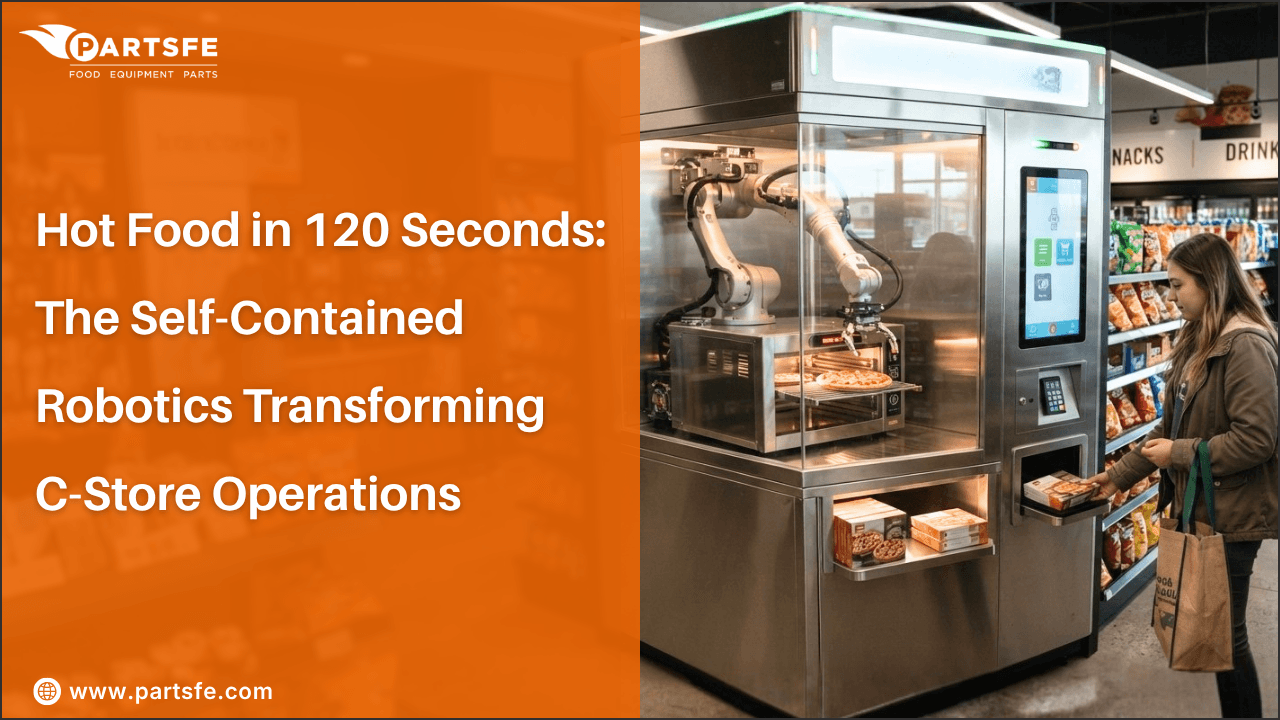
Hot Food in 120 Seconds: The Self-Contained Robotics Transforming C-Store Operations
The convenience store industry is undergoing a major transformation as operators expand beyond fuel, packaged snacks, and beverages into fresh, made-to-order foodservice. This shift is creating new competition for quick-service restaurants while increasing pressure on C-stores to deliver quality, speed, and value with limited space and labour. According to Mintel, the U.S. convenience store foodservice sector is projected to reach $78.1 billion, while Datassential reports that 60% of C-store operators saw foodservice sales increase over the past year.
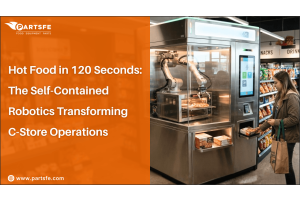
However, scaling fresh food can create challenges involving labour, food safety, waste, and limited space. To address these pressures, operators are increasingly exploring self-contained food robotics that automate preparation and cooking within compact footprints. Some systems can produce hot, made-to-order meals in 120 seconds or less, helping C-stores deliver faster foodservice while integrating automation into existing retail operations.
Beyond the Roller Grill: How Consumer Demand Is Reshaping C-Store Foodservice
Convenience store foodservice is changing as customers look for more variety, better-quality food, and freshly prepared meals. Datassential’s 2026 research shows this shift clearly: hot dog availability has fallen by 22 % points, while breakfast sandwiches are now offered by 93% of C-store operators. Other handheld foods, such as taquitos and tornados, are also becoming more common. These changes show that customers are no longer relying only on traditional roller-grill foods when choosing a quick meal.
To keep up with these expectations, C-store operators are looking for equipment that can prepare a wider range of hot foods without requiring a large kitchen.
The Rise of “New Classics”
Datassential uses the term “New Classics” to describe familiar foods updated with new flavours, ingredients, formats, or textures. For C-stores, this can mean offering upgraded sandwiches, burritos, flatbreads, and other hot handheld meals alongside traditional favourites.
Where Traditional Equipment Falls Short
Roller grills and hot-holding equipment work well for products designed to be cooked in batches and kept warm. However, they offer less flexibility for foods that need to be heated or prepared individually. Microwaves can provide faster heating but may not deliver the texture or consistency required for every menu item.
How Food Robotics Support New Menus
Self-contained food robotics combine automated functions such as food handling, heating, cooking, and dispensing in one compact unit. Depending on the system, this allows C-stores to prepare individual orders consistently while using less space than a traditional kitchen setup.
This shift gives operators another way to expand hot-food menus while balancing speed, consistency, labour requirements, and limited store space.
C-stores offering fresh food need refrigeration that matches the products being sold and the way they are displayed. At PartsFe, operators can find VITLIFE commercial merchandising refrigerators for specific applications, including open-air multideck merchandisers for grab-and-go products, refrigerated bakery display cases for baked goods, and glass-door reach-in refrigerators for packaged food and beverages. These options make it easier to match refrigeration equipment to product type and display requirements.
The Architecture of 120-Second Automation: Reducing Labour Pressure in C-Stores
Labour is one of the biggest operational challenges for convenience stores, particularly as foodservice becomes a larger part of the business. Employees may need to handle checkout, restocking, cleaning, customer service, and food preparation during the same shift. Adding fresh food preparation can increase the workload and make service harder to manage during busy periods. Self-contained food robotics can reduce this pressure by automating key food preparation and heating tasks.
The technology can change how employees and equipment work together:
- Automated Food Preparation: The system can handle defined preparation or heating steps with limited manual intervention.
- Compact Footprint: Self-contained units can fit into smaller areas than a conventional kitchen setup, depending on the model.
- Faster Order Fulfilment: Automated cooking or heating cycles can help prepare selected products within a short, consistent timeframe.
- Consistent Processing: Automated temperature and timing controls can reduce variations between individual orders.
- Less Manual Food Handling: Employees do not need to perform every preparation step for each order.
- Better Labour Allocation: Staff can spend more time on checkout, customer assistance, restocking, cleaning, and other store responsibilities.
The goal is not to eliminate employees but to reduce repetitive foodservice tasks. By moving suitable preparation steps to an automated system, C-stores can give employees more time to manage the wider store operation while maintaining a faster and more consistent hot-food service.
Zero Cross-Contamination and Hyper-Compliance: The Science of Automated Food Safety
As convenience stores expand their fresh-food offerings, food safety becomes increasingly important. Manual preparation can introduce risks when employees handle multiple tasks, follow inconsistent procedures, or do not maintain required temperature and sanitation controls. Automated food systems can reduce some of these risks by limiting direct food handling and standardising specific preparation steps.
Several features can help improve food safety control:
- Reduced Direct Contact: Automated dispensing and handling can limit the number of times employees physically handle food.
- Controlled Preparation: Predefined cooking or heating cycles can help maintain consistent processing conditions.
- Temperature Monitoring: Sensors can track food or equipment temperatures where the system is designed to do so, supporting temperature-control procedures.
- Time-based Controls: Some systems can track holding or product-use periods and restrict products that exceed configured limits.
- Standardised Procedures: Automated steps can reduce variation between employees and shifts.
- Operational Records: Certain systems can record temperatures, alerts, cycles, or other data that may support internal food-safety procedures.
Automation does not eliminate food-safety responsibilities. Operators still need appropriate sanitation, ingredient handling, storage, employee practices, and compliance procedures. However, when properly designed and maintained, automated food equipment can reduce manual handling and make important control points more consistent and easier to monitor.
Seamless Omnichannel Integration: Future-Proofing the Neighborhood Pit Stop
Self-contained food robotics are giving convenience stores another way to expand hot-food service without building a full commercial kitchen. By combining automated food handling, heating, cooking, and dispensing in a compact system, these units can support consistent preparation and faster order fulfilment while fitting into limited retail space.
The technology is not a replacement for every foodservice operation. Its value depends on factors such as customer demand, menu selection, order volume, equipment utilisation, food costs, maintenance, and available space. For C-stores, the opportunity is to use automation where it can complement existing operations and create additional foodservice revenue.
Key Takeaways
- Self-contained robotics can combine several foodservice functions in one unit.
- Automated processes can reduce repetitive food preparation tasks.
- Made-to-order preparation can help reduce reliance on batch cooking.
- Compact systems can support hot-food service where kitchen space is limited.
- Automation can help provide more consistent preparation and service times.
- Employees still need to manage cleaning, replenishment, monitoring, and food safety.
- ROI depends on sales volume, utilisation, food costs, labour, maintenance, and equipment investment.
- The strongest opportunity may be adding foodservice sales without significantly expanding the store footprint.
Keeping commercial food equipment operational also requires reliable replacement components when parts wear out or fail. PartsFe provides commercial food equipment replacement parts for refrigerators, ice machines, ovens, fryers, and other kitchen equipment, helping foodservice operators maintain equipment and replace worn or faulty components.
FAQs
Are food robots worth it for convenience stores?
They can be worthwhile when a store has enough food demand to justify the equipment and operating costs while benefiting from reduced preparation labor and added foodservice sales.
How much does a food robot cost for a convenience store?
The cost varies by system, menu, installation requirements, and service agreement. Operators should consider the total equipment and operating cost rather than the purchase price alone.
What kind of food can a convenience store robot make?
Depending on the system, food robots can prepare or heat items such as burgers, breakfast sandwiches, pizza, baked goods, snacks, and other ready-to-heat meals.
Are food robots safe to use in convenience stores?
Yes, when properly installed, operated, cleaned, and maintained. Food-safety procedures for storage, heating, holding, sanitation, and allergens still apply.
How much maintenance does a food robot need?
Maintenance varies by system but can include cleaning, inspection, replenishment, software updates, component servicing, and preventive maintenance.
|
Disclaimer: This blog is for informational purposes only and provides general information about self-contained food robotics and convenience store operations. Information may vary by equipment and operating conditions. |