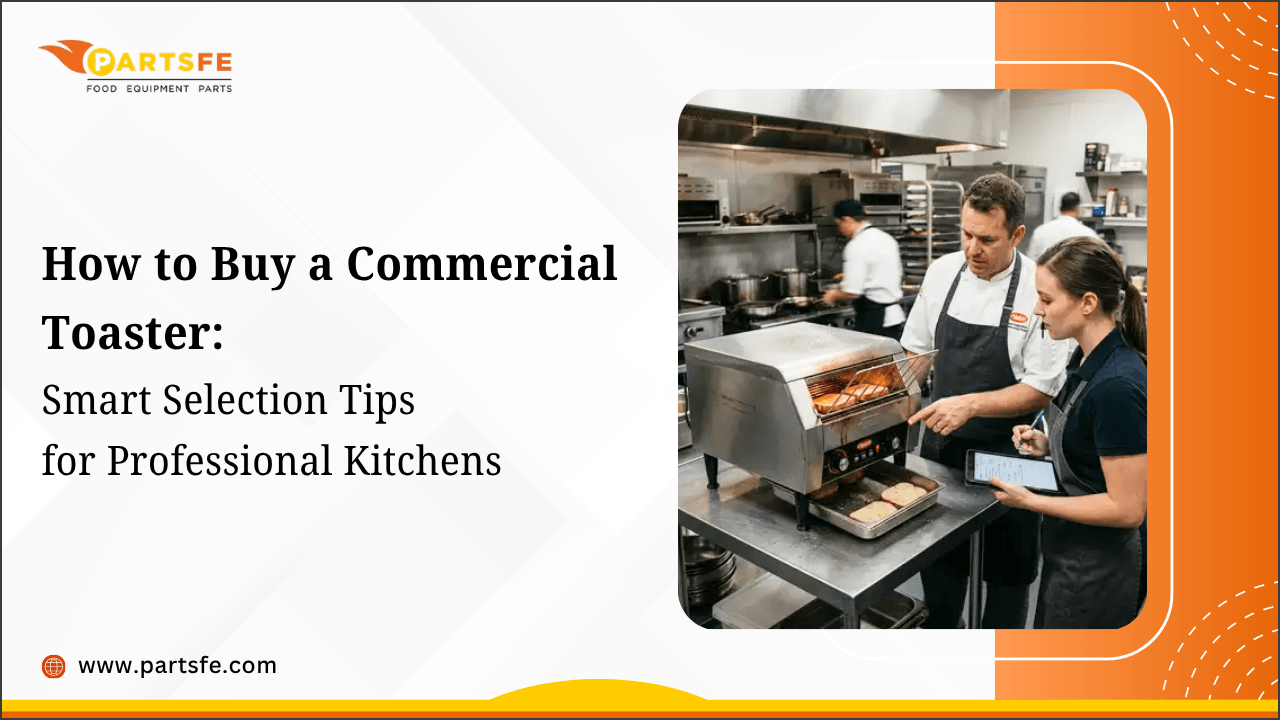
How to Buy a Commercial Toaster: Smart Selection Tips for Professional Kitchens
Choosing the right commercial toaster is critical for efficiency, but here’s a key insight: over 68% of commercial kitchens experience slowdowns due to mismatched equipment capacity. Whether you run a restaurant, café, or hotel, the right toaster, and access to reliable toaster spare parts, helps reduce wait times and deliver consistent results.
Selecting the right model isn’t just about features, it’s about matching your kitchen’s volume, durability needs, and long-term performance goals. A smart choice improves workflow, reduces maintenance issues, and boosts overall productivity. This guide covers types, key features, and practical buying tips to help you choose the best commercial toaster for maximum efficiency.
Why Choosing the Right Commercial Toaster Matters for Kitchen Efficiency
Choosing the right commercial toaster plays a crucial role in maintaining efficiency in a professional kitchen. In fast-paced environments, even minor delays can disrupt workflow and affect customer satisfaction. A high-quality toaster ensures consistent browning, quick output, and reliable performance, allowing kitchen staff to keep up with demand during busy hours without compromising food quality.
Key reasons it matters:
-
Ensures consistent toasting quality across all orders
-
Reduces preparation time during peak hours
-
Supports faster service and improved customer experience
-
Minimizes equipment downtime and maintenance issues
-
Helps staff manage workload more efficiently
-
Improves overall kitchen productivity
By investing in the right commercial toaster, businesses can streamline daily operations and maintain a steady service flow. This leads to better time management, reduced stress for kitchen staff, and a more satisfying dining experience for customers, ultimately supporting long-term efficiency and growth.
Types of Commercial Toasters and Their Best Use Cases
Commercial toasters come in different types, each designed to meet specific kitchen needs and service volumes. Choosing the right type depends on your menu, output requirements, and workspace. Understanding how each toaster functions helps ensure smoother operations and better efficiency in a professional kitchen.
Here’s a quick comparison to help you understand which type of commercial toaster best fits your kitchen needs:
|
Toaster Types |
Best Use Case |
Output Level |
Key Advantages |
|
Conveyor Toaster |
Hotels, buffets, high-volume kitchens |
High |
Continuous operation, consistent results, hands-free use |
|
Pop-Up Toaster |
Cafes, small kitchens |
Low to Medium |
Compact, affordable, easy to operate |
|
Bun Toaster |
Burger joints, QSRs |
Medium to High |
Ideal for buns, fast heating, and uniform toasting |
|
Contact Toaster |
Sandwich shops |
Medium |
Even heating, quick results, versatile use |
|
Salamander Toaster |
Restaurants, finishing dishes |
Medium |
Great for melting cheese, browning toppings |
|
Deck Toaster |
Bakeries, specialty kitchens |
Low to Medium |
Even heat distribution is good for artisan bread |
Selecting the right commercial toaster types ensures your kitchen can handle demand efficiently without delays. It also helps maintain consistent food quality while improving overall workflow.
Explore Commercial Pizza Ovens: Types, Cost, Installation & More to find the perfect fit for your kitchen and maximize performance
Key Features to Consider When Buying a Commercial Toaster
Choosing the right features in a commercial toaster is essential for ensuring efficiency, durability, and consistent performance in a professional kitchen. The right combination of features can help speed up operations, reduce maintenance efforts, and deliver uniform results, especially during peak hours when reliability matters most.
Key features to consider:
-
Heating Performance: Look for a fast heat-up time and even heat distribution for consistent toasting
-
Adjustable Controls: Temperature and speed settings allow flexibility for different bread types
-
Build Quality: Stainless steel construction ensures durability and long-term use
-
Capacity & Output: Choose a model that matches your kitchen’s volume requirements
-
Ease of Cleaning: Removable crumb trays and accessible parts simplify maintenance
-
Safety Features: Auto shut-off, cool-touch exterior, and overload protection enhance safety
-
Energy Efficiency: Helps reduce electricity consumption and operational costs
Focusing on these features helps you select a toaster that not only meets your current needs but also supports long-term efficiency and reliability. A well-equipped toaster can significantly improve workflow and maintain consistent food quality.
Budget, Brand, and Buying Considerations for Long-Term Value
Choosing the right commercial toaster is not just about price, it’s about ensuring long-term value, reliability, and smooth kitchen operations. Considering key factors like budget, brand, and support helps you make a smarter investment.
Budget and Cost Efficiency
-
Set a practical budget based on usage
-
Focus on value over the lowest price
-
Choose energy efficient commercial toaster to save costs
Brand Reliability and Performance
-
Select trusted and durable brands
-
Check product performance and consistency
-
Ensure toaster spare parts are easily available
Warranty and Long-Term Value
-
Look for a solid warranty and service support
-
Choose durable, easy-to-maintain models
-
Match the toaster with your workload needs
A well-balanced decision ensures your commercial toaster delivers consistent performance and supports your kitchen in the long run.
Explore Commercial Charbroilers 101: A Guide to Types, Setup, Maintenance, and Common Issues for efficient and reliable kitchen performance
Summary: Choose the Right Commercial Toaster for Maximum ROI
Selecting the right commercial toaster is a smart investment that directly impacts your kitchen’s efficiency, consistency, and overall performance. By understanding your operational needs, choosing the right type, and focusing on essential features, you can ensure smooth workflows and faster service during busy hours. A well-suited toaster helps maintain food quality while reducing delays and operational stress.
Focusing on long-term value, such as durability, energy efficiency, and reliable performance, can save costs over time and improve productivity. Making an informed decision not only enhances daily operations but also contributes to better customer satisfaction and business growth.
Key Takeaways:
-
Match the toaster type with your kitchen volume and menu
-
Prioritize essential features like speed, durability, and safety
-
Choose reliable brands with good support and warranty
-
Consider long-term value over just initial cost
-
Ensure the toaster fits your space and workflow
-
Invest in quality equipment for better efficiency and ROI
Shop at PartsFe to keep your kitchen running at peak efficiency with high-quality commercial appliance parts. From essential toaster components to parts for ovens, fryers, and grills, PartsFe provides reliable solutions from trusted brands, ensuring fast shipping, consistent performance, and minimal downtime in your professional kitchen.
FAQs
What type of commercial toaster is best for high-volume kitchens?
Conveyor toasters are the best choice for high-volume kitchens as they can toast large quantities quickly and consistently with minimal manual effort.
How many slices per hour should a commercial toaster handle?
It depends on your kitchen demand, but high-volume operations typically require a toaster that can handle 300–600+ slices per hour for efficient service.
Are conveyor toasters worth the investment?
Yes, conveyor toasters are worth it for busy kitchens as they improve speed, consistency, and productivity, ultimately saving time and labor costs.
What safety features should I look for?
Look for features like cool-touch exteriors, automatic shut-off, overheating protection, and non-slip feet to ensure safe operation in a busy kitchen.
How do I maintain a commercial toaster for longevity?
Regular cleaning of crumb trays, checking heating elements, and following manufacturer maintenance guidelines help extend the toaster’s lifespan and maintain performance.
|
Disclaimer: The content of this blog is intended for general informational purposes only and should not be considered professional or technical advice. |