What Is a Thermostat: Guide on How They Work & Different Types You Need to Know
Thermostats are wondrous inventions. They control the temperature of a device by regulating the flow of gas, steam, or water to the systems. These systems use a variety of components like relays, valves, switches, and more. When the temperature in the device exceeds or falls below the desired value, the thermostat sends an electrical signal to one or more of these devices to either open or close their respective connections. Vulcan and Star are the most popular brands of thermostats available in the market today. They are durable, economical, reliable and compatible with various commercial cooking devices.
In this article let us find out thermostat working in different appliances, types of thermostats, how to choose them, how to reset & install them.
What is the function of a thermostat?
In commercial restaurant equipment, a thermostat plays a pivotal role by regulating temperatures. What is thermostat used for in commercial restaurant equipments? It ensures precise control over ovens, grills, and other equipment, maintaining consistent cooking conditions. This function guarantees food quality, safety, and energy efficiency. Thermostats detect temperature changes and activate heating or cooling mechanisms accordingly, helping chefs achieve accurate and repeatable results. Ultimately, these devices are crucial for meeting culinary standards and optimizing kitchen operations in the fast-paced environment of a commercial restaurant.
Before we delve in & find out watch the below video:
How does a thermostat work in commercial restaurant equipments?
We know that the thermostat is an automatic regulating device that controls the temperature in a cooking device. It measures the temperature of the exhaust and compares it to a set point. The difference between the set point and current temperature is what regulates the level of fuel flow to maintain a stable cooking environment. Let us look how does a thermostat work in different appliances:
Oven thermostat
An oven thermostat is an essential component that regulates the temperature within ovens, ensuring precise cooking conditions. Gas oven thermostat is commonly situated within the electric ignition system or a separate control unit. Comprising a sensor and controller, the sensor often employs electrical resistance or bimetallic strips for temperature detection. This data is then fed to the controller, which can feature either an on-off switch for power modulation or an electric relay for more sophisticated temperature management. Both gas and electric oven thermostats maintain culinary accuracy, guaranteeing consistent and delectable results with every use.
Stove thermostat
A stove thermostat is a device that is used to measure the temperature of the cooking surface. It is inserted into the cooking area and has a probe that detects the temperature of the cooking surface. Different types of stoves have different requirements for their thermostats. For example, if you have an electric stove, then you should use a thermostat with an electric probe and if you have a gas stove, then you should use a thermostat with a gas probe.
Know about How to replace an oven thermostat.
Dishwasher thermostat
A dishwasher thermostat is a device that monitors the temperature of the water inside a dishwasher. The thermostat is often located at or near the bottom of the dishwasher. It will turn off the dishwasher when it reaches a certain temperature, and then turn it back on when it cools down. The purpose of this device is to prevent damage to dishes and other items that are being washed in hot water by preventing them from being subjected to heat for too long.
Ice machine thermostat
The Ice Machine thermostat is a device that is used to control the temperature of an ice machine. It is also known as a water-cooled or refrigerated thermostat. These devices are often used in commercial, industrial and residential ice machines. The Ice Machine Bin Thermostat is connected to the water line that feeds into the ice machine. The device has two sensors which monitor the temperature of the water coming from the water line and going into the ice machine. If this temperature falls below a certain level, then it will turn on an electric heating element which will heat up this water until it reaches a certain set point for safety purposes.
Griddle thermostat
A griddle thermostat is a device that can measure the temperature of the surface of a griddle. It is mainly used to regulate the temperature of the griddle. The principle behind how an electric griddle thermostat works is that it has two probes, one for measuring the temperature near the bottom and one for measuring the temperature near the top. The difference between these two temperatures is then used to determine how much power should be applied to maintain an even cooking surface.
Refrigerator thermostat
A thermostat in a refrigerator operates by sensing the internal temperature. When the temperature rises above the set point, the thermostat triggers the cooling system to turn on. Once the desired temperature is reached, the thermostat halts the cooling process. This cyclic regulation ensures that the fridge maintains an optimal temperature, preserving the freshness of stored items.
What do HVAC thermostats do?
The thermostat is a device that measures and regulates temperature to keep it between a set point (e.g., 68°F). Thermostats are most commonly used for controlling heating and cooling systems, such as furnaces or air conditioners. Lennox thermostat, Trane thermostat, Rheem-ruud thermostat, Thermostat For Lochinvar & A.O. Smith, and Venstar thermostat are the well known manufactures that you can install in your HVAC system. Let's look at how a thermostat works in different HVAC systems.
How does an air conditioner thermostat work?
An air conditioner thermostat is responsible for regulating the temperature of the air in a room. It does so by turning on and off the compressor and fan as needed to reach a desired temperature. The thermostat is connected to a sensor that measures the temperature inside the room. When this sensor detects that it has reached a certain temperature, it sends an electrical signal to the thermostat which then turns off the compressor and fan. The cycle repeats until the desired temperature has been reached or exceeded.
A furnace thermostat: how does it work?
A furnace thermostat is a device that tells the furnace when to turn on and off. It is usually located in the house near the furnace. It has a sensor that detects when the temperature in the house reaches a certain point, and then it tells the furnace to turn on or off.
What is the function of a heat pump thermostat?
A heat pump uses a refrigerant to transfer heat from one place to another. In a heat pump, the refrigerant is pumped through pipes and coils in a sealed system. The refrigerant absorbs the heat from the outside air, cools down and becomes a liquid. The liquid is then pumped into an indoor coil where it gives up its heat to the inside air, becomes a gas again and starts to circulate back out of the outdoor coil. This process continues until there is no more heat available in the outside air or until you turn off the thermostat.
How does a thermostat work in a broiler?
Broiler thermostats are used to regulate the temperature in a broiler house. They measure the temperature at the floor of the house and use that to set the desired temperature for the rest of the house. The thermostat is usually located near an air intake or near an exhaust vent. It measures and compares temperatures at different locations in order to calculate how much heat is needed to maintain a desired temperature.
Types of Thermostats in Restaurant Equipments
In commercial cooking equipment, the chefs and cooks are required to monitor the temperature of various dishes. This can be done in a number of ways, but the most common is through a thermostat. There are two thermostat types used in commercial cooking: mechanical and digital.
Mechanical thermostat
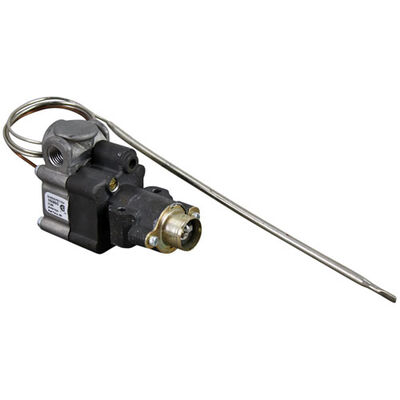
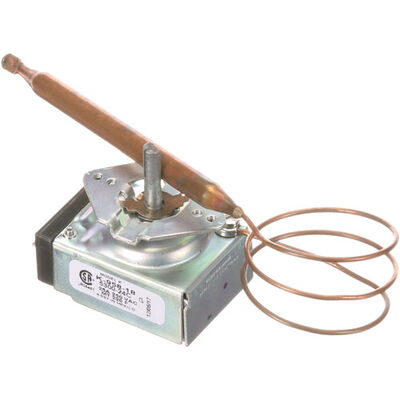
The use of a thermostat is a great way to regulate the temperatures in your kitchen. These devices can be used for ovens, griddles, fryers, braising pans and pasta cookers. The primary gas flow is automatically controlled by a mechanical thermostat that is either snap-acting or time-delay. Mercury, which typically controls mechanical thermostats, expands and contracts with temperature changes and mechanically opens or closes the valve to regulate the flow of gas through the system.
Digital thermostat
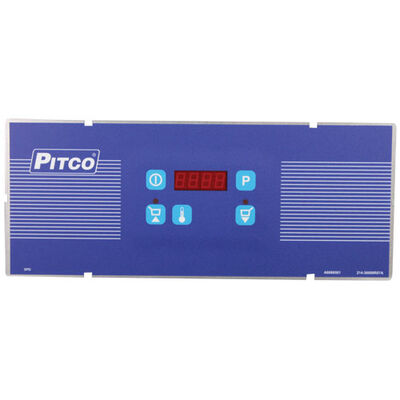
Digital thermostats are now a common sight in commercial kitchens. These devices, which often come with a touchscreen display, are regulating devices that control the temperature of physical systems by sensing the temperature and performing action.
How to choose best thermostat: Mechanical or Digital thermostat?
When selecting a thermostat for commercial kitchen equipment, the decision between a mechanical and a digital thermostat depends on several factors, including the type of equipment, budget, and precision requirements.
Mechanical Thermostat:
-
Best for: Low-maintenance equipment that doesn't require precise temperature control.
-
Pros: Cost-effective, reliable, and easy to repair.
-
Cons: Less accurate and lacks fine-tuning options.
Digital Thermostat:
-
Best for: High-precision temperature control or equipment that requires fine temperature adjustments.
-
Pros: Accurate, efficient, and often provides more functionality.
-
Cons: More expensive and may require more frequent maintenance.
Ultimately, if you're running a commercial kitchen that needs precise temperature control for cooking or preservation, a digital thermostat would be a better option. If you are working with equipment that doesn’t require such precision, a mechanical thermostat might be sufficient.
How to reset thermostat in different commercial kitchen equipments?
Over time, thermostats in commercial kitchen equipment may need to be reset due to malfunctioning, temperature inconsistencies, or when the appliance is being reinstalled. Here are some general instructions on how to reset thermostats in different kitchen equipment:
Ovens and Ranges:
-
Turn off the oven or range and unplug it from the power source.
-
Allow the appliance to cool down completely.
-
Locate the thermostat reset button (if present) or follow the manufacturer’s instructions to reset it.
-
Once reset, turn the oven or range back on and check the temperature settings.
Refrigerators and Freezers:
-
Disconnect the unit from the power supply.
-
Check the thermostat’s dial or digital display to ensure it’s properly set.
-
Plug the appliance back in and observe the temperature readings. If the thermostat doesn't respond, refer to the manufacturer's manual for further troubleshooting.
Fryers:
-
For deep fryers, turn off the equipment and unplug it.
-
If your fryer has a high-limit switch, press the reset button (usually found on the front or side of the unit).
-
Reconnect the fryer and check the oil temperature.
Dishwashers and Steamers:
-
Turn off the appliance and ensure it is disconnected from power.
-
Press and hold the reset button for 10-15 seconds, or refer to the specific appliance's manual for instructions on resetting.
-
Restart the appliance and check the temperature settings to ensure accuracy.
In some cases, a professional technician may be needed to troubleshoot and reset thermostats in more complex equipment.
If the thermostat is not working, then it is time to replace it. This is a simple solution that can be done in a short period of time. Cecilware, Imperial, Hobart, Pitco and APW are the well-known manufacturers that manufacture thermostats for commercial kitchen equipment. They are highly respected for combining their expertise with new and innovative ideas to create top-notch products.
How to install a new thermostat in your restaurant kitchen equipment?
Installing a new thermostat in your kitchen equipment may seem like a daunting task, but with the right tools and knowledge, it's possible to do it yourself. Here’s a general guide to help you through the process:
-
Turn Off and Unplug Equipment: Before performing any work, ensure the appliance is turned off and disconnected from the power supply to avoid electrical hazards.
-
Locate the Old Thermostat: Refer to the manufacturer's manual to find the thermostat's location in the equipment. It’s typically located near the heating or cooling element.
-
Remove the Old Thermostat: Depending on the appliance, you may need to remove screws or panels to access the thermostat. Once you locate the thermostat, disconnect any wiring or connections. Keep track of how the thermostat is connected for easier installation of the new one.
-
Install the New Thermostat: Attach the new thermostat by connecting the wiring as per the manufacturer’s instructions. Ensure all connections are secure and correctly placed.
-
Reassemble the Equipment: Once the thermostat is installed, reassemble any panels or components that were removed to access the thermostat
-
Test the Equipment: Plug the equipment back in, set the desired temperature, and check to see if the new thermostat is functioning correctly. Monitor the appliance for a few hours to ensure the temperature is stable.
FAQs
How do thermostats measure temperature?
Thermostats typically use a sensor, such as a bimetallic strip or a thermistor, to detect temperature changes. These sensors expand or contract in response to temperature variations, which triggers the thermostat to control heating or cooling systems accordingly.
What type of thermostat is in an oven?
Ovens often use a capillary tube thermostat. This type consists of a sensor bulb connected to the temperature control dial via a long, flexible capillary tube, regulating the oven's temperature by expanding or contracting the gas in the bulb.
How do I calibrate the thermostat in my commercial refrigerator?
Calibration methods can vary, but generally, you'll need a calibrated thermometer. Compare the thermostat reading with the calibrated thermometer's reading, then adjust the thermostat as needed according to the manufacturer's instructions.
Do commercial dishwashers have thermostats?
Yes, commercial dishwashers have thermostats to control water temperature, ensuring dishes are sanitized properly. Regular maintenance and calibration are essential for their effectiveness.