
The Best Grill Grates to Fit your Budget and Basic Grilling Needs
Grill grates play an important role in how food cooks by creating the contact surface between the food and the grill’s heat. Their material, construction, and surface design can influence searing, heat distribution, food support, and the overall grilling experience.
Choosing the right grill grate improves cooking performance and makes routine cleaning and maintenance easier. The correct size and construction also help ensure the grate fits securely and works properly with your grill, whether you are replacing a worn grate or selecting one for a new setup.
This blog explains the different types of grill grates, their materials, important features to consider, and practical tips for choosing, cleaning, and replacing the right grate for your grill.
Table of Contents
What Are the Different Types of Grill Grates and Which Materials Are Best?
Grill Grate Size, Shape, and Spacing for Different Cooking Needs
How Much Do Grill Grates Cost and When Should You Replace Them?
What Should You Check Before Buying a Replacement Grill Grate?
Grill Grate Cleaning and Maintenance for Long-Term Performance
What Are the Different Types of Grill Grates and Which Materials Are Best?
Grill grates are the cooking surfaces that support food above a grill's heat source and come in different materials, shapes, and designs that affect heat retention, food contact, cooking performance, and maintenance. Common options include cast iron, stainless steel, porcelain-coated grates, and specialty cooking grids.
When choosing a grate, consider its construction and grill compatibility, as a grate designed for a gas grill may not fit a charcoal or pellet grill even when the dimensions appear similar.
1. Cast-Iron Grill Grates

Cast-iron grates are thick and heavy, allowing them to retain heat well once they reach grilling temperature. They are particularly useful for high-heat cooking and searing but require proper care to prevent rust.
Pros
- Excellent heat retention
- Good for high-heat searing
- Durable when properly maintained
Cons
- Heavy and harder to handle
- Can rust without proper maintenance
Best suited for: Steaks, burgers, and high-heat grilling where heat retention and searing are important.
Example: Star Mfg 2F-Z3078 Grill Cast Iron Bottom Grate provides a sturdy surface for commercial grilling and broiling.
2. Stainless Steel Grill Grates
Stainless-steel grates are made from corrosion-resistant steel and come in different rod diameters and thicknesses. Their performance depends on the grate's construction and the amount of metal used.

Pros
- Good corrosion resistance
- No traditional seasoning required
- Easier routine maintenance
Cons
- Can discolor with repeated high heat
- Lightweight versions may lose heat faster
Best suited for: Frequent grilling, mixed foods, and users who prefer routine cleaning without traditional bare-cast-iron seasoning.
3. Porcelain-Enameled Cast-Iron Grill Grates

These grates combine a cast-iron core with a porcelain-enamel coating. The cast iron provides heat retention, while the coating protects the cooking surface and eliminates the need for traditional seasoning on the coated areas.
Pros
- Strong heat retention
- Protected against surface rust
- Does not require traditional seasoning on the coated surface
Cons
- Coating can chip or crack
- Damaged coating can expose the underlying iron
Best suited for: Steaks, burgers, and general grilling when you want a heavy grate with a coated surface.
Example: Electrolux 0CB531 Enamelled Grid Iron is suitable for everyday grilling applications.
4. Porcelain-Enameled Steel Grill Grates
Porcelain-enameled steel grates use a steel base covered with a porcelain coating. They are generally lighter than cast iron and can heat and cool more quickly.
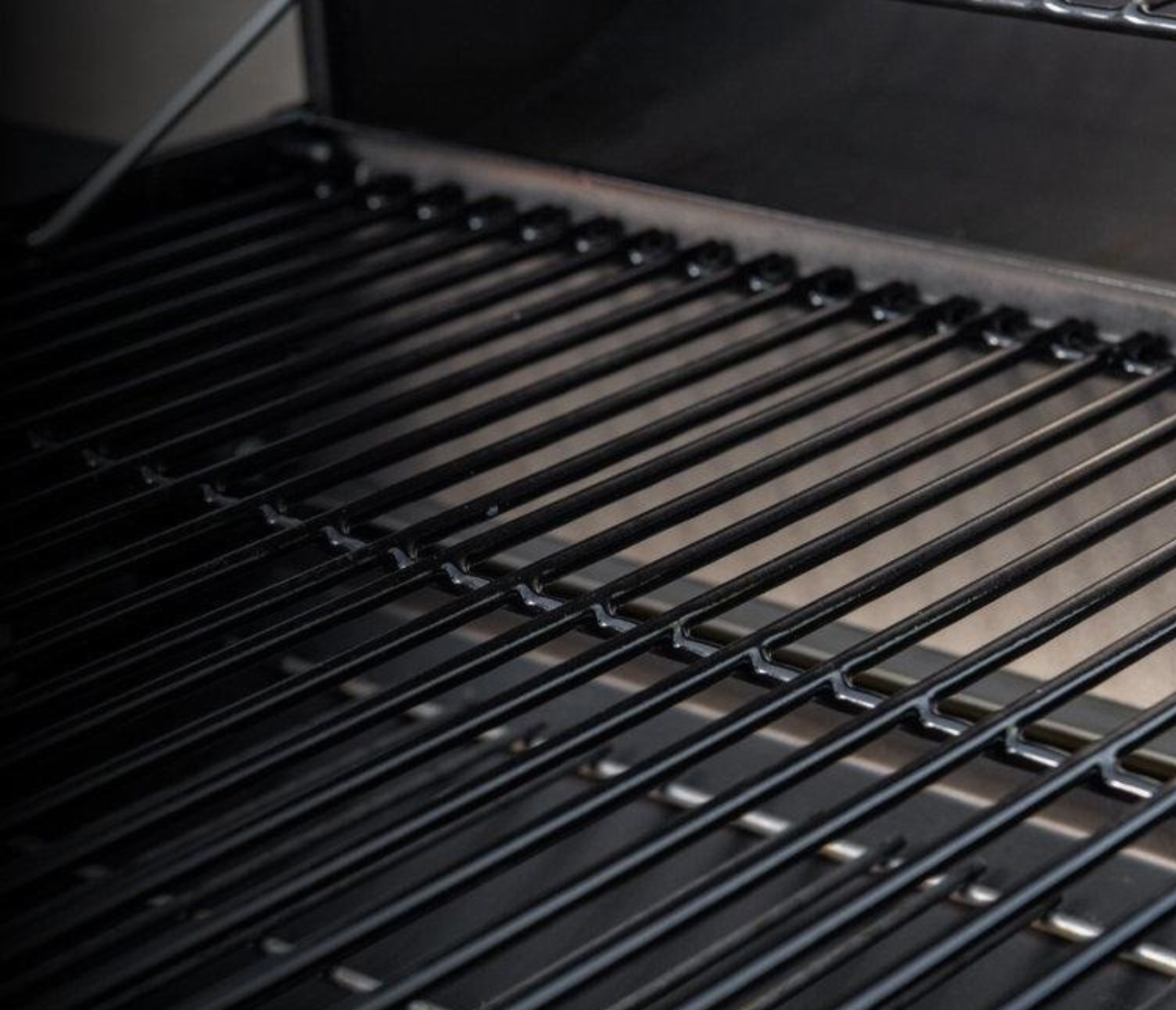
Pros
- Protected cooking surface
- Generally lighter than cast iron
- Easy to clean with proper care
Cons
- Porcelain coating can chip
- Lower heat retention than heavy cast iron
- Damaged areas can become more difficult to maintain
Best suited for: Everyday backyard grilling and users who want a coated cooking surface.
5. Reversible Grill Grates and Specialty Cooking Grids

Specialty grates may feature ridged and flat surfaces, wider bars, wave patterns, or separate sections. These designs provide different cooking surfaces for different foods and cooking techniques.
Pros
- More cooking flexibility
- Can provide different surfaces for different foods
- Some designs combine searing and flatter cooking areas
Cons
- May cost more than standard grates
- Must match the grill's support and dimensions
Best suited for: Cooks who want more than one cooking surface or who prepare a variety of foods.
Example: The Garland 4526206 Broiler Reversible Grate is suited for commercial cooking applications that require a reversible grate surface.
Grill Grate Size, Shape, and Spacing for Different Cooking Needs
The size, shape, and spacing of a grill grate determine how food sits on the cooking surface and how much of it contacts the hot metal. These design details can affect food support, sear marks, heat retention, and grease movement, making them important when selecting or replacing a grate.
The Role of Bar Size and Rod Thickness in Heat Retention
Thicker metal rods contain more material and generally have greater thermal mass, helping the cooking surface maintain heat when cold food is added.
- Thick Rods: Typically 7 mm to 9 mm or thicker, these provide greater thermal mass and can maintain surface heat well when cold food is placed on the grate.
- Thin Rods: Often around 3 mm to 5 mm, these contain less metal and generally heat and cool more quickly than heavier rods.
The Impact of Grill Bar Shape and Surface Profile on Sear Patterns
The top surface determines how much of the food directly contacts the hot metal and influences the appearance of sear marks. Different profiles can also affect how grease moves across the cooking surface.
- Round Rods: Provide defined contact points that can create narrower sear marks while leaving more open space between the rods.
- V-Shaped Bars: Can direct grease away from the cooking surface and help manage grease movement near the heat source.
- Flat-Top Bars: Provide a broader contact area and can offer more continuous support for foods such as burgers, chops, and vegetables.
The Balance Between Bar Spacing and Firebox Airflow
The distance between bars creates a balance between food support and the size of the openings across the cooking surface. Spacing is particularly important when grilling smaller or delicate ingredients.
- Narrow Spacing: Provides better support for foods such as shrimp, asparagus, onions, and sliced vegetables, reducing the chance of them falling through the grate.
- Wide Spacing: Works well for larger foods such as steaks and burgers but leaves larger openings that may not suit smaller ingredients.
Ultimately, choosing a grill grate requires balancing bar thickness, surface shape, spacing, and overall dimensions with the foods you commonly grill.
How Much Do Grill Grates Cost and When Should You Replace Them?
Grill grate replacement costs vary by material, size, construction, number of grate sections, and grill model. Replacement cooking grates can cost around $90 to $250 or more, while larger specialty systems can cost considerably more.
Understanding Grill Grate Costs by Performance Tier
The following ranges provide a general estimate for common replacement grate options:
| Price Tier | Average Cost | Common Options | Performance and Value Trade-Off |
|---|---|---|---|
| Budget Tier | Approx. $70–$90 | Basic steel and smaller replacement grates | Lower upfront cost and suitable for lighter or occasional use |
| Mid-Range Tier | Approx. $90–$160 | Cast iron, porcelain-coated, and standard stainless steel grates | Offers a balance of durability, cooking performance, and replacement cost |
| Premium Tier | Approx. $160–$250+ | Heavy-duty stainless steel and specialty grate systems | Higher upfront cost, generally suited to heavier use and more durable construction |
Prices can fall outside these ranges depending on the grate material, size, number of pieces, and grill model. Higher-priced options may include heavier construction, larger grate sections, or specialty designs.
For instance, the Delfield DOP00016 Stainless Steel Grate is priced at approx. $208.94, while the Jade Range 1011600000 Cast Iron Top Grate is priced at approx. $106.81.
Clear Signs It Is Time to Replace Grill Grates
Replace a grate when damage affects its structural strength, food support, or ability to sit securely on the grill.
Consider replacing a grate when you notice:
- Flaking or Chipped Coating: Exposes the underlying metal and can require replacement.
- Deep Rust or Pitting: Severe corrosion can weaken the grate.
- Cracks or Broken Bars: Reduce food support and structural strength.
- Warping: Can cause the grate to sit unevenly or become unstable.
- Loose or Poor Fit: Indicates the grate may no longer fit securely on its supports.
- Severe Surface Damage: Heavy buildup or deterioration that cannot be restored may call for replacement.
Light surface rust or discoloration does not automatically mean replacement. If the grate remains structurally sound, then cleaning and maintenance may be enough.
What Should You Check Before Buying a Replacement Grill Grate?
Before buying a replacement grill grate, check more than its material or appearance. The replacement should match your grill's dimensions, configuration, and mounting arrangement to provide a secure fit and proper food support.
1. Check the Exact Dimensions: Compare the replacement grate with the existing one by checking:
- Width
- Depth
- Thickness
- Rod diameter
- Overall shape
- Spacing between rods
- Section dimensions
Even a small dimensional difference can prevent a grate from sitting correctly on its supports.
2. Verify the Grill Model and Part Number: Check the grill's manufacturer, model or series on the equipment label, then use the model information to identify the correct grate part number. Matching the part number can help distinguish between grates that look similar but have different dimensions or mounting configurations.
3. Compare the Support and Mounting Points: Check where the grate rests or attaches inside the grill. The replacement should have the same support arrangement as the original so it sits securely without excessive movement.
4. Check the Grate Configuration: Determine whether your grill uses one large grate or multiple sections. If it uses separate sections, compare the number and arrangement of the sections before ordering.
5. Confirm the Material and Surface Design: Verify the material and cooking-surface configuration of the replacement. Check whether it uses cast iron, stainless steel, porcelain-coated construction, round rods, flat bars, ridges, or another design.
6. Compare the Weight and Construction: For commercial equipment, weight and construction can help confirm whether a replacement is comparable to the original grate. Check the listed weight, number of ribs or crossbars, and overall construction when these specifications are available.
Example: For a Vulcan Hart cast-iron grate, check SKU 00-851800-00910. Perform a dimension check using the 24" × 6" grate size and 9.424" length, 2.337" width, and 0.236" height against your existing grate. Also compare the 18.955-lb weight, cast-iron construction, 3 crossbars, and 11 ribs, and match the brand, model, and series with the compatible equipment.
Matching these details helps ensure the replacement grate fits securely and works properly with the grill.
Grill Grate Cleaning and Maintenance for Long-Term Performance
Regular cleaning removes food residue, grease, and carbon buildup, while proper maintenance helps prevent rust, corrosion, and surface damage. A consistent cleaning routine also keeps the cooking surface ready for the next grilling session.
How Should You Clean Grill Grates After Cooking?
- Remove food residue: Brush the grate after cooking while it is still warm to loosen stuck-on food.
- Remove heavy buildup: Use warm, soapy water when grease or carbon has accumulated.
- Scrub carefully: Use a suitable grill brush or non-abrasive scrubber for the grate surface.
- Rinse and dry: Remove cleaning residue and dry the grate completely before storing or using it.
- Avoid harsh tools: Aggressive scraping can damage porcelain coatings and other finished surfaces.
How Can You Maintain Grill Grates for Longer Use?
- Prevent rust: Keep the grate dry and lightly oil bare cast iron after cleaning.
- Control grease buildup: Clean the grate regularly rather than allowing residue to accumulate.
- Protect coated surfaces: Avoid dropping, striking, or aggressively scraping porcelain-coated grates.
- Inspect regularly: Look for deep rust, broken rods, cracks, warping, or damaged coatings.
- Replace when necessary: Consider a replacement when damage affects the grate's strength, food support, or cooking performance.
Consistent cleaning and basic maintenance can help keep grill grates in good condition and support more consistent cooking. Regular inspection also makes it easier to identify damage before it affects everyday grilling.
Check out How to Clean Grill Grates: Effective Methods to learn practical ways to remove grease, food residue, and buildup while keeping your grates ready for the next cook.
Summary: Choosing the Best Grill Grates for Your Grill
Choosing the right grill grate depends on the material, size, cooking surface, and type of grilling you do. Cast iron provides strong heat retention for searing, stainless steel offers corrosion resistance and easier routine care, while porcelain-coated grates provide a protected cooking surface.
For a replacement, fit is just as important as material. Check the width, depth, thickness, spacing, shape, number of sections, and support points to ensure the grate matches your grill. Regular cleaning and proper maintenance can also help extend its useful life.
Key Takeaways
- Choose the grate material based on your cooking style and maintenance preference.
- Consider grate thickness, rod diameter, and spacing for cooking performance.
- Check exact dimensions and support points when buying a replacement.
- Clean grates regularly to control grease and food buildup.
- Replace grates with severe rust, broken rods, warping, or major coating damage.
Need a replacement grill grate for your commercial cooking equipment? PartsFe offers a range of quality restaurant equipment replacement parts, including grill grates, with detailed product information to help you compare options by equipment model, part number, dimensions, material, and grate design. Find replacement grill grates such as cast-iron broiler grates, stainless-steel cooking grates, and other commercial grill components based on your equipment model and part requirements.
References:
https://www.weber.com/US/en/blog/burning-questions/whats-the-best-type-of-cooking-grate/weber-30422.html
FAQs
Do thicker grill grates cook better?
Thicker grates contain more metal and can retain heat effectively, but cooking performance also depends on the grate material, grill design, and heat source.
Why does food stick to my grill grate?
Food can stick when the grate is dirty, insufficiently heated, or lacks proper surface preparation. Excess moisture on the food can also increase sticking.
Should grill grates be replaced every year?
Not necessarily. A well-maintained grate can last for several years. Replacement depends more on its condition, including rust, broken rods, warping, and coating damage.
Can I use a grill grate with smaller spacing for all foods?
Smaller spacing provides better support for small foods, but it can change how much food contacts the heat and may produce different searing patterns. Your typical foods should guide the choice.
|
Disclaimer: This blog is for informational purposes only and provides general guidance on grill grates, their materials, features, cleaning, maintenance, and replacement. Information may vary depending on the grill equipment. |