How Advanced Water Filtration Systems Improve Efficiency in Foodservice Operations in 2026
In 2026, foodservice operations are increasingly prioritizing efficiency, sustainability, and quality, making water management a critical focus. Advanced water filtration systems have emerged as a key solution, ensuring that kitchens receive clean, high-quality water that meets both operational and health standards. By removing impurities, sediments, and harmful contaminants, these systems not only enhance the taste and safety of food and beverages but also protect kitchen equipment from scale buildup and corrosion, reducing maintenance costs and downtime.
Moreover, modern water filtration systems support faster, more consistent service by optimizing water flow and reliability. Restaurants, cafeterias, and catering services benefit from improved operational efficiency, lower energy consumption, and compliance with evolving health regulations, making advanced water filtration an essential investment for 2026 and beyond.
Why Is Water Quality a Critical Efficiency Factor in Modern Foodservice Operations?
Water quality is a critical efficiency factor in modern foodservice operations. Poor water can slow processes, damage equipment, and increase costs. Commercial water filtration systems ensure high-quality water, supporting smooth, cost-effective operations across all types of foodservice establishments such as:
-
Restaurants: Filtered water ensures consistent food taste and beverage quality. It also protects kitchen equipment, improving longevity and performance.
-
Cafés & Coffee Shops: High-quality water enhances coffee and tea flavor consistency. It prevents scale buildup, keeping brewing equipment efficient.
-
Catering Services: Reliable water supports large-scale food preparation and events. It ensures consistent cooking results and smooth service flow.
-
Hotels & Resorts: Clean water improves cooking, cleaning, and appliance efficiency. It helps maintain quality across high-volume hospitality operations.
-
Institutional Foodservice: Filtered water supports safe, consistent meal production. It improves hygiene, efficiency, and reliability in daily operations.
-
Food Trucks & Ghost Kitchens: Clean water enables consistent food and beverage quality on the move. It supports reliable performance in compact and mobile kitchens.
Maintaining water quality prevents scale buildup and corrosion in kitchen equipment, helping extend its lifespan while reducing operational downtime and maintenance costs. By ensuring consistent water quality, it improves the speed and reliability of cooking and beverage preparation, minimizes waste, and supports sustainability initiatives. As a result, staff can focus more on delivering excellent service instead of spending time troubleshooting water-related issues.
How Advanced Water Filtration Systems Improve Equipment Performance and Lifespan
Modern water filtration systems are equipped with various advanced features that protect appliances, reduce maintenance, and ensure consistent performance.
|
Filtration Feature |
Advantages |
Examples of Equipment |
|
Flow Rate |
Keeps water flowing at the correct speed, preventing slowdowns during busy service periods. |
Ice Machines, Dishwashers, Coffee Machines |
|
Micron Rating |
Removes sediments that could clog equipment, ensuring smooth operation. |
Coffee Machines, Ice Makers, Dishwashers |
|
Contaminant Reduction / Removal Efficiency |
Ensures water is safe and clean, maintaining beverage and food quality. |
Coffee Machines, Ice Makers, Dishwashers, Boilers |
|
Capacity |
Supports high-volume operations by helping plan timely filter replacements. |
All Water-Using Equipment |
|
TDS Reduction |
Reduces total dissolved solids, preventing scale buildup in boilers, espresso machines, and coffee machines. |
Espresso Machines, Boilers, Coffee Machines |
|
Pressure Drop |
Maintains optimal water pressure to prevent equipment from slowing down or underperforming. |
Dishwashers, Ice Machines, Coffee Machines |
|
Water Hardness Reduction |
Prevents scale formation caused by hard water, protecting equipment and improving lifespan. |
Dishwashers, Ice Makers, Coffee Machines |
|
Filter Longevity / Life Span |
Extends filter life and minimizes interruptions, ensuring continuous equipment operation. |
All Water-Using Equipment |
Impact of Filtered Water on Food Quality, Beverage Consistency, and Output
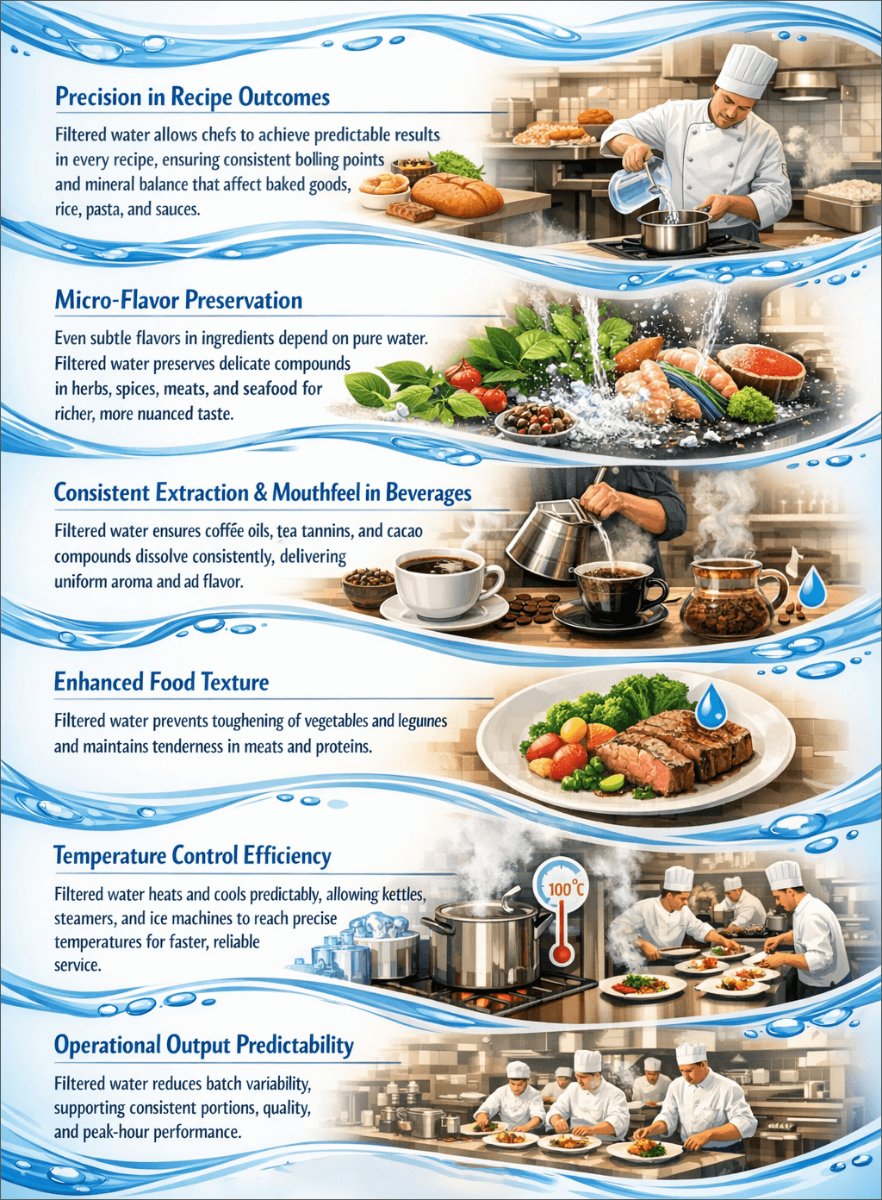
Filtered water is often overlooked, yet it subtly transforms both the efficiency of a kitchen and the sensory experience of food and drinks. Its influence goes beyond taste to precision, texture, and consistency.
Check out the refrigerated beverage dispenser comprehensive buying guide to find the best options for efficiency, durability, and consistent beverage quality.
How Can Water Filtration Reduce Maintenance Costs, Downtime, and Operational Waste?
Clean water is essential for smooth industrial and commercial operations. Effective water filtration not only protects equipment but also improves overall efficiency.
-
Maintenance Costs: Poor water quality often leads to higher maintenance expenses, including the repair or replacement of pumps, boilers, and pipes affected by scale, corrosion, or sediment buildup. Systems require frequent cleaning or descaling to remain functional, while water filters or membranes must be replaced more often. In addition, emergency maintenance and unscheduled repairs increase labor costs and disrupt planned operations.
-
Downtime: Equipment failure caused by scale or corrosion can result in unexpected production stoppages. Systems may need to be shut down regularly for cleaning, descaling, or chemical treatment, reducing overall productivity. Inefficient heating, cooling, or restricted water flow can also cause operational delays, slowing processes and impacting service delivery.
-
Operational Waste: Inefficient water systems generate excess sludge, sediment, and debris during daily operations. This often leads to the overuse of chemicals for water treatment and system protection. Energy is wasted due to poor heat transfer in boilers or cooling systems, while water loss increases through leaks, backwashing, or frequent flushing of poorly maintained equipment.
Explore sustainable success: how to minimize waste in your culinary operations by implementing smart practices, efficient inventory management, and eco-friendly processes.
Conclusion: How Will Advanced Water Filtration Shape Foodservice Efficiency and Sustainability in 2026?
Advanced water filtration is set to redefine foodservice operations by boosting efficiency, cutting costs, and supporting sustainable practices. By ensuring cleaner water, businesses can protect equipment, maintain consistent product quality, and reduce operational waste. Restaurants and cafes that invest in the best commercial water filtration system are positioned to achieve long-term reliability and environmental responsibility.
Key Takeaways:
-
Smart Water Monitoring: Next-generation filtration systems can track water quality in real time, allowing managers to detect issues before they affect operations.
-
Support for Specialty Beverages: Consistent, pure water ensures better extraction and flavor for coffee, tea, and other specialty drinks, elevating customer experience.
-
Eco-Friendly Certifications: Investing in advanced filtration helps businesses achieve sustainability certifications, appealing to environmentally conscious customers.
-
Improved Staff Productivity: Reduced manual cleaning and maintenance means kitchen staff can focus on service and food prep rather than equipment troubleshooting.
-
Integration with IoT Systems: Modern filtration can connect to smart kitchen networks, providing alerts, usage data, and predictive maintenance insights.
-
Water Cost Optimization: By reducing waste and improving system efficiency, businesses can lower overall water bills without compromising performance.
Clean, high-quality water is no longer just a utility—it’s a strategic advantage. By leveraging advanced filtration, foodservice businesses can achieve greater efficiency, reduce operational waste, and deliver superior quality to customers while advancing sustainability goals.
Looking to upgrade or maintain your commercial water filtration systems? PartsFe has you covered with high-quality parts for restaurant equipment and water filtration solutions. From replacement filters and cartridges to complete filtration units from top brands like Power Soak Systems, Dynamic Cooking Systems, and Rational Cooking Systems, we ensure your kitchen equipment receives clean, high-quality water for consistent food and beverage quality. Protect coffee machines, ice makers, and dishwashers while reducing maintenance costs and downtime, keeping your operations running smoothly in any busy foodservice environment.
References:
https://www.energystar.gov/sites/default/files/tools/ES_Checklist_Restaurants_2023_1.pdf
https://www.nsf.org/water-systems/water-treatment-filtration-systems
FAQs
What is a commercial reverse osmosis water filtration system?
A commercial RO system uses a semi-permeable membrane to remove impurities, minerals, and contaminants from water. It provides clean, purified water for cooking, beverages, ice machines, and coffee or tea service.
What are the most common water filtration systems for restaurants?
Restaurants commonly use carbon filters, sediment filters, and reverse osmosis systems. These remove chlorine, odors, particles, and provide purified water for cooking, beverages, and equipment.
How does water filtration impact the taste and quality of food and drinks?
Filtered water ensures beverages and recipes taste consistent and fresh. It removes impurities that can cause off-flavors or affect food quality.
Can water filtration systems help reduce restaurant equipment maintenance?
Yes, filtration removes minerals and sediments that cause scale and corrosion in kitchen equipment. This helps extend equipment life and lowers maintenance costs.