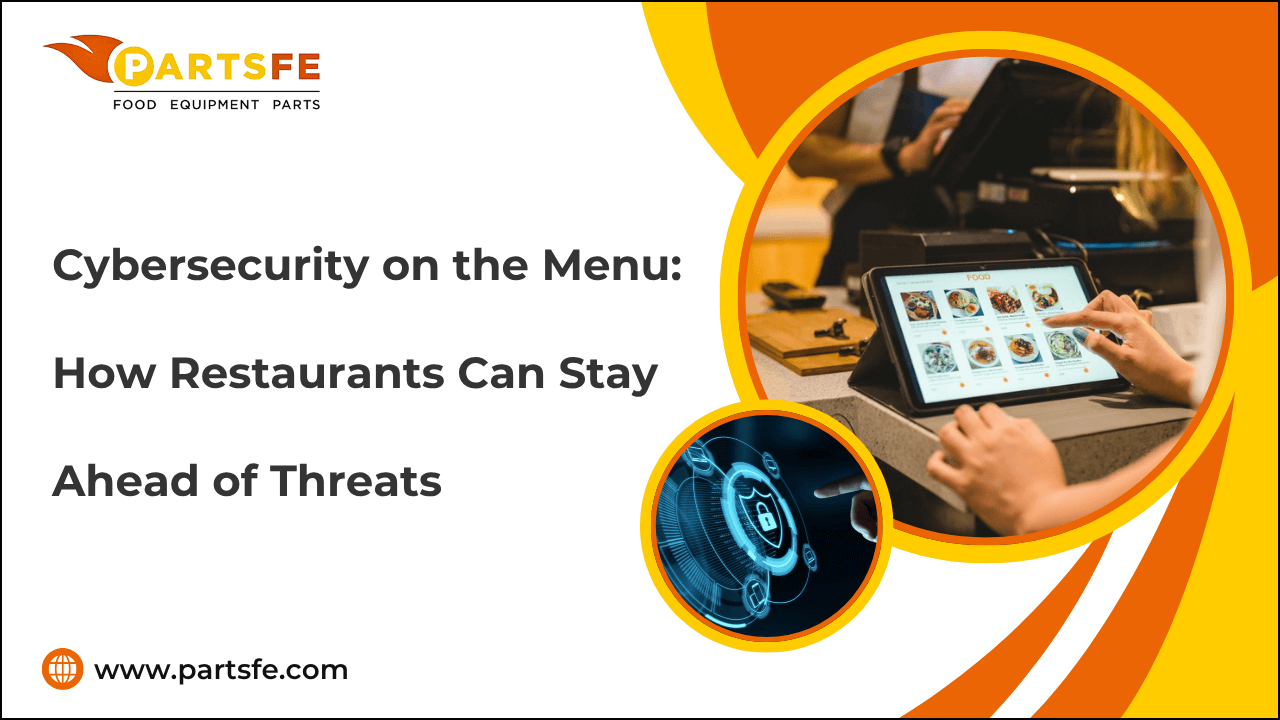
Cybersecurity on the Menu: How Restaurants Can Stay Ahead of Threats
In today’s fast-paced digital world, restaurants increasingly rely on technology for everything from online reservations and digital payments to kitchen management systems and customer loyalty programs. While these innovations have revolutionized the dining experience, they have also introduced new vulnerabilities. Restaurants now face a growing number of cyber threats that can compromise sensitive customer data, disrupt operations, and cause lasting damage to their reputation.
Cybercriminals are actively targeting restaurants due to the valuable data they handle, including credit card information and personal customer details. Small and medium-sized restaurants, in particular, are at heightened risk because of limited cybersecurity budgets and expertise. To protect their businesses and customers, restaurant owners must prioritize cybersecurity as a core part of their operations. By adopting robust security measures and staying informed about emerging threats, restaurants.
Why Cybersecurity Risks Are Rising for Restaurants
As restaurants adopt more digital technologies, cybersecurity risks are increasing due to several evolving factors:
-
Rapid Digital Transformation: Restaurants are integrating online ordering, mobile payments, and cloud-based POS systems faster than they can implement proper security measures.
-
Expanding Attack Surface: With more connected devices—smart kitchen appliances, digital menus, Wi-Fi networks—the number of potential entry points for cyberattacks grows.
-
Increased Data Collection: Loyalty programs, reservations, and online apps collect sensitive customer information, making restaurants attractive targets for hackers.
-
Higher Cybercrime Sophistication: Hackers are using advanced techniques like ransomware, phishing, and malware specifically designed to exploit restaurant technology systems.
-
Limited Cybersecurity Preparedness: Many small and mid-sized restaurants lack dedicated IT security staff or budgets, leaving them vulnerable to emerging threats.
-
Regulatory & Compliance Pressure: As privacy laws and payment security standards tighten, non-compliance adds another layer of risk if security measures lag behind.
These factors show why cybersecurity risks in restaurants are increasing and highlight the need for proactive strategies to protect operations and customer trust.
Common Cybersecurity Threats Facing Restaurants
Restaurants face a growing variety of cyber threats as they digitize operations. Understanding these common risks is essential for protecting customer data and maintaining smooth business operations:
-
POS Malware and Skimming: Malicious software can infect point-of-sale systems, capturing credit card data in real time. Attackers target both franchise and independent locations.
-
Phishing Attacks: Employees may be tricked into revealing login credentials or downloading malware via deceptive emails or messages. Even a single click can compromise entire networks.
-
Ransomware: Cybercriminals can lock restaurant systems or encrypt critical data, demanding payment to restore operations. Outages can disrupt kitchen workflows, reservations, and payment processing.
-
Insider Threats: Employees or vendors with access to sensitive systems may misuse privileges intentionally or accidentally, leading to data breaches.
-
Credential Stuffing & Account Takeovers: Weak or reused passwords allow attackers to access POS systems, management dashboards, or loyalty apps.
-
Third-Party Vendor Vulnerabilities: Compromised vendors, including POS providers or delivery platforms, can serve as gateways into restaurant networks.
-
IoT and Network Exploits: Connected devices like smart kitchen appliances, digital signage, and guest Wi-Fi can be entry points if not properly secured.
-
Data Leakage and Privacy Violations: Unsecured databases, APIs, or mobile apps may inadvertently expose customer or employee information.
By recognizing these threats, restaurants can prioritize defenses, implement targeted security measures, and reduce the risk of costly cyber incidents.
The Financial Impact of Cyberattacks on Restaurants
Cyberattacks can have severe financial consequences for restaurants, affecting both immediate operations and long-term reputation. Understanding these costs helps businesses prioritize cybersecurity investments:
-
Operational Downtime: Ransomware or system breaches can halt POS systems, kitchen operations, and online ordering, leading to lost revenue.
-
Data Breach Costs: Restaurants may face expenses related to notifying affected customers, providing credit monitoring, and managing regulatory compliance.
-
Legal & Regulatory Penalties: Breaches involving sensitive customer information can result in fines and lawsuits, especially under state privacy laws and PCI DSS compliance requirements.
-
Remediation Expenses: Costs include hiring cybersecurity experts, restoring systems, and implementing enhanced security measures following the incident.
-
Reputation Damage: Customer trust may decline after a breach, resulting in long-term loss of business and brand value.
-
Cyber Insurance Premiums: Filing claims may lead to higher premiums or difficulties in renewing coverage.
-
Third-Party Liability: Breaches originating from vendors can create additional financial and legal responsibilities for the restaurant.
Real-world examples:
-
Golden Corral (2023–24): Exposed data of ~180,000 individuals, leading to lawsuits, regulatory scrutiny, and remediation costs.
-
Earl Enterprises (2018–19): Extended POS breach across multiple restaurants led to prolonged remediation and legal expenses.
By understanding these financial impacts, restaurants can better justify cybersecurity investments and proactive risk management.
Explore this article on 13 most common restaurant challenges: expert tips & solutions, offering practical strategies to overcome operational, staffing, and financial hurdles.
Best Cybersecurity Practices for Restaurants
To defend against advanced cyber threats, restaurants must adopt a structured, technically sound cybersecurity framework. Key practices include:
-
Regular Vulnerability Assessments:
Perform scheduled scans and penetration tests on POS systems, network infrastructure, and IoT devices to identify exploitable weaknesses.
Example: In 2024, Panera Bread in Missouri experienced a system breach affecting online ordering and employee data, showing the importance of regular vulnerability checks. -
Network Segmentation & Zero Trust Architecture:
Isolate POS, administrative, and guest Wi-Fi networks; implement zero-trust principles to restrict lateral movement within the network.
Example: In 2024, Krispy Kreme in North Carolina faced a cyberattack disrupting online ordering, highlighting the need for network segmentation. -
Multi-Factor Authentication (MFA) Across Systems:
Enforce MFA on all administrative portals, cloud platforms, and vendor-access points to prevent unauthorized access.
Example: In 2024, Café Zupas in Colorado detected suspicious access to corporate accounts, demonstrating the importance of MFA. -
Endpoint Detection and Response (EDR):
Deploy EDR solutions on all endpoints, including tablets and kitchen IoT devices, to detect anomalous behavior and mitigate threats in real time.
Example: A 2024 ransomware attack on Yum! Brands in Kentucky disrupted IT systems, showing the value of EDR monitoring. -
Automated Patch Management:
Utilize centralized patch management to deploy security updates across POS, operating systems, and applications promptly.
Example: In 2024, Grubhub in Illinois suffered a security breach due to unpatched vulnerabilities, emphasizing timely updates. -
Encryption of Data at Rest and in Transit:
Ensure PCI-compliant encryption for payment data, and enforce TLS/SSL for internal and external communications.
Example: In 2024, Chipotle in California reported a breach exposing customer payment info, highlighting the need for strong encryption. -
Secure Cloud Configurations:
Apply least-privilege access, audit logging, and continuous cloud security monitoring for SaaS and PaaS platforms.
Example: In 2024, Domino’s Pizza in Michigan had a breach due to misconfigured cloud settings, showing the need for secure cloud practices. -
Incident Response Drills & Playbooks:
Maintain detailed IRPs and conduct periodic simulations to validate detection, containment, and recovery procedures.
Example: In 2023, Papa John’s in Kentucky conducted a simulated cyberattack to test its response plans, identifying areas for improvement.
Adopting these technical controls ensures that restaurants maintain operational resilience, regulatory compliance, and robust protection against sophisticated cyberattacks.
Check out this article on how the U.S. restaurant industry is negotiating a challenging environment, highlighting the strategies businesses use to tackle rising costs, labor shortages, and changing customer demands.
Essential Technology Solutions to Protect Your Restaurant
To defend against evolving cyber threats, restaurants need modern technology solutions that protect customer data, payments, and operations:
-
Digital Payment Tokenization Platforms: Use specialized tokenization platforms that replace sensitive payment data with unique identifiers to minimize exposure in breaches.
-
Next-Generation Firewalls (NGFW): NGFWs provide deep packet inspection, application-level filtering, and real-time threat prevention to secure restaurant networks.
-
Security Information and Event Management (SIEM) Systems: SIEM platforms collect and analyze logs from multiple systems to detect unusual patterns and potential attacks in real time.
-
Connected Appliance Security Management: Protect smart kitchen devices, digital displays, and temperature monitoring systems with centralized security updates and access controls.
-
Secure Customer Relationship Management (CRM) Systems: Implement encryption and access controls for cloud-based CRM tools to protect customer loyalty and personal data.
-
Identity & Access Management (IAM): IAM solutions enforce role-based access, track login activity, and integrate with MFA for stronger account security.
-
Automated Cloud Security & Backups: Cloud platforms with automated threat detection, encryption, and daily backups protect customer and operational data from ransomware and accidental loss.
-
AI-Driven Threat Intelligence & Behavioral Analytics: AI monitors user behavior and network traffic to identify anomalies, predict attacks, and proactively respond to threats.
These solutions create a layered cybersecurity strategy that strengthens restaurant operations, maintains customer trust, and ensures regulatory compliance.
Final Thoughts
As restaurants become more reliant on digital systems for operations, ordering, and payments, cybersecurity must be a top priority. Cyber threats like data breaches, ransomware, and phishing attacks can severely damage a restaurant’s reputation and customer trust. To stay ahead, restaurants should invest in secure payment systems, regularly update software, train staff on security best practices, and implement strong access controls. Partnering with cybersecurity experts and conducting regular risk assessments can further strengthen defenses. By making cybersecurity a key part of their business strategy, restaurants can protect sensitive data, maintain customer loyalty, and ensure long-term operational resilience in a digital world.
Looking for quality food equipment to enhance your restaurant’s menu operations? ParsFe offers top-quality kitchen appliances, food prep tools, and commercial refrigerators designed to meet the highest standards. Explore trusted brands like Vitamix, Blodgett, and True Refrigeration to equip your kitchen for success.
References:
https://www.cisa.gov/
https://restaurant.org/
https://www.nsf.org/
FAQs
How are U.S. restaurants increasingly vulnerable to cyber threats today?
As more U.S. restaurants rely on online ordering, mobile payments, and delivery apps, their digital footprint—and risk—has grown. Many use outdated systems or lack cybersecurity expertise, making them easy targets.
Why should restaurants care about state-level data breach laws?
All 50 U.S. states have their own data breach notification laws, and penalties vary widely. Failing to report a breach on time can lead to fines, lawsuits, and public trust issues.
How can a restaurant meet PCI DSS compliance requirements?
Restaurants must ensure their card payment systems are secure, networks are segmented, and staff follow strict security policies. Regular self-assessments or audits may be required depending on transaction volume.
Why is ransomware a growing threat for U.S. restaurants?
Hackers know restaurants can't afford downtime and may pay quickly to restore operations. Even small restaurants have been hit, sometimes through phishing emails or compromised vendors.
Why are independent restaurants at higher cyber risk than chains in the U.S.?
They often lack dedicated IT teams or resources for proper cybersecurity. Chains usually have centralized protections, while independents may rely on outdated or DIY setups.