Benefits of Tableside Ordering : Is Your Restaurant Prepared?
Tableside ordering, once a rarity, has become increasingly popular in restaurants worldwide. This innovative approach involves servers using handheld devices to take orders directly at the table, offering a range of benefits for both customers and restaurant staff.
| Table of Contents: What is Tableside Ordering? Benefits of Tableside Ordering Restaurant POS systems with Tableside Ordering Choose the right restaurant POS system Types of Tableside Ordering Systems Are you ready for your restaurant to offer Tableside Ordering? |

What is Tableside Ordering?
Using portable electronics like tablets or smartphones, restaurant employees collect orders from patrons at their tables as part of a tableside ordering service.
By streamlining the ordering procedure, this contemporary method does away with the necessity for servers to continually move between a stationary terminal and the table. Shorter wait times, faster service, and more precise order taking are the outcomes.
Know more about Commercial Restaurant's Kitchen Cleaning Checklist: Daily, Weekly & Monthly
Benefits of Tableside Ordering
Tableside ordering offers benefits like enhanced customer interaction and point of sales (POS) as servers can provide personalised recommendations and answer questions about the menu because the system can recommend other things or upgrades. It also makes it easy to upsell. Additionally, tableside ordering can improve inventory management by tracking stock levels in real-time and prevent wastage by only offering items that are in stock. Here are few listed among many:
Enhanced customer experience:
Servers can spend more time chatting with patrons, making tailored recommendations, and responding to inquiries about the menu when tableside ordering is available. This personalised approach can enhance the overall dining experience, making customers feel valued and appreciated.
Increased efficiency:
Orders placed at the table are delivered straight to the bar or kitchen, cutting down on mistakes and expediting the ordering process.. Higher client satisfaction and quicker service are possible outcomes of this efficiency.
Improved order accuracy:
Servers can guarantee they accurately record specific requests and customer preferences by accepting orders at the table. This can lessen the requirement for corrections by lowering the amount of order errors.
Upselling opportunities:
Upselling opportunities are presented to waiters by tableside ordering systems that can be designed to recommend upgrades or additional goods. The average check size may rise as a result, increasing the restaurant's earnings.
Real-Time inventory management:
Restaurant employees can monitor inventory levels in real time by integrating tableside ordering systems with inventory management software. This can help prevent stock outs and reduce waste by ensuring that only items in stock are offered to customers.
Enhanced payment options:
Many tableside ordering systems allow customers to pay directly at the table, offering a range of payment options including credit cards, mobile payments, and split checks. Customers' wait times can be shortened and their overall eating experience enhanced by this convenience.
Know more about Strengths & Weaknesses Of A Restaurant To Thrive In Business
Restaurant POS systems with Tableside Ordering
In today's fast-paced restaurant industry, efficiency and customer satisfaction are key to success. Restaurants are using Point of Sale (POS) systems with tableside ordering capabilities as one means of accomplishing these objectives.
Servers can spend more time chatting with patrons, making tailored recommendations, and responding to inquiries about the menu when tableside ordering is available. Orders are transmitted straight to the bar or kitchen, which expedites the ordering procedure and lowers the possibility of mistakes. Tableside ordering POS systems for restaurants can be configured to recommend extras or upgrades, giving waiters more chances to upsell and make more money. Restaurant employees can monitor inventory levels in real time by integrating these technologies with inventory management software.
Choose the right restaurant POS system
Here is what one must consider to choose the right POS system for your restaurant:
Ease of use: Customers and servers alike find the system easy to use.
Customization: System that is specifically designed to meet the needs of your restaurant, including menu options and prices.
Security: deciding on strong security measures that can shield client information and stop unauthorised access.
Types of Tableside Ordering Systems
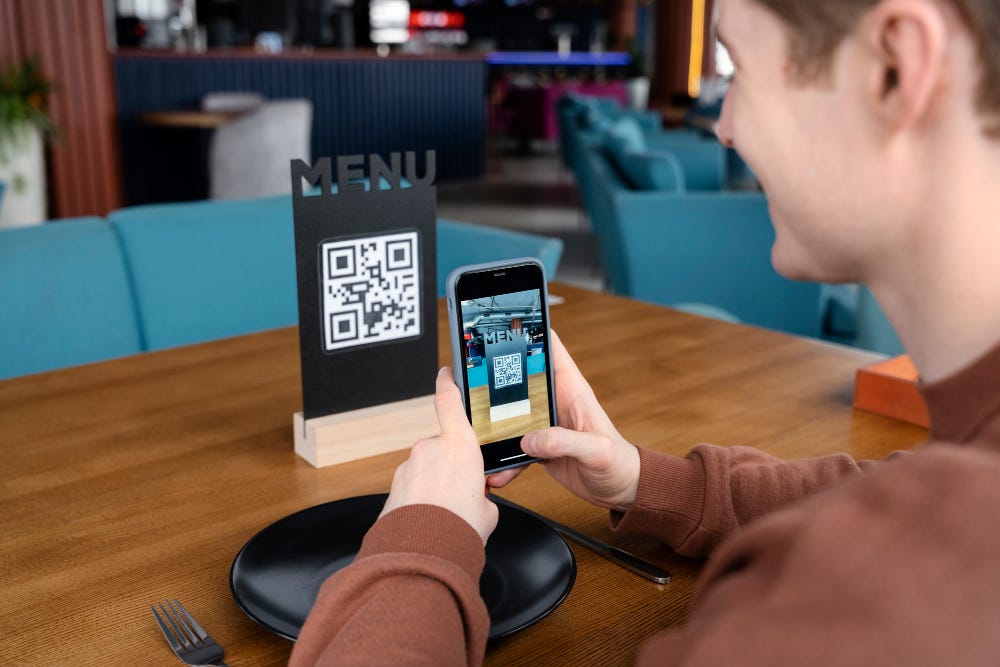
A technologically advanced solution that expedites the ordering and payment procedure is a tableside ordering system. In restaurants, tableside ordering can be set up in a few different ways.
In the restaurant sector, tableside ordering has grown in popularity as a more effective and convenient way to take orders and improve the eating experience. There are several different types of tableside ordering systems, and each has unique benefits and features. We will examine the various tableside ordering methods and how they are transforming the restaurant business in this blog post.
Tablet-Based ordering systems
Tablet-based ordering systems are perhaps the most common type of tableside ordering system. Servers use these devices, which are made up of portable tablets, to accept orders right at the table. Tablet-based ordering systems typically feature a user-friendly interface that allows servers to easily navigate the menu, enter orders, and send them directly to the kitchen. Some tablet-based systems also include additional features such as payment processing and customer feedback capabilities.
Smartphone-Based ordering systems
Smartphone-based ordering systems are similar to tablet-based systems but use smartphones instead of tablets. Servers can use their own smartphones or restaurant-provided devices to take orders at the table. Smartphone-based ordering systems offer the same benefits as tablet-based systems, including improved efficiency and accuracy.
Self-Service kiosks
Self-service kiosks are another type of tableside ordering system that allows customers to place their own orders. These kiosks are typically located at the table or near the entrance of the restaurant and feature a touchscreen interface that customers can use to browse the menu and place their orders. Self-service kiosks can help reduce wait times and improve order accuracy, as customers can take their time to review the menu and make selections.
RFID (Radio-Frequency Identification) ordering systems
RFID ordering systems use RFID technology to track and process orders. Each table is equipped with an RFID tag, and servers use handheld devices with RFID readers to scan the tag and take orders. RFID ordering systems can help improve order accuracy and streamline the ordering process, as servers can quickly scan the tag to retrieve the table's order history and preferences.
Virtual waiter systems
Virtual waiter systems are a more advanced type of tableside ordering system that uses artificial intelligence (AI) to interact with customers and take orders. Customers can use their smartphones to chat with the virtual waiter, which can provide menu recommendations, take orders, and process payments. Virtual waiter systems can help reduce the workload on restaurant staff and provide a more personalised experience for customers.
Know more about Why First-Party Delivery Is Important To Restaurants?
Are you ready for your restaurant to offer Tableside Ordering?
Being ahead of the curve is crucial in the restaurant industry, which is always changing. Tableside ordering has become a game-changer, providing patrons with a more individualised and fast eating experience. But putting tableside ordering into practice calls for significant planning and preparation. To help you determine whether you're ready for tableside ordering, here are some important clues.
Assess your current technology infrastructure
The first step in determining if your restaurant is ready for tableside ordering is to assess your current technology infrastructure. Have a reliable Wi-Fi network that can support handheld devices and a POS system that is compatible with tableside ordering software. Making sure your technical infrastructure is enough to implementing tableside ordering successfully.
Evaluate your menu and pricing strategy
Consider your menu and price carefully before introducing tableside ordering, a menu that is simple to use and comprehend, and your rates are reasonable. By simplifying your menu and price structure and facilitating consumer ordering, tableside ordering can improve customer satisfaction and even boost revenue through upselling and cross-selling.
Consider your staff training needs
Your employees will need to receive training in order to implement tableside ordering. Think about if your employees are ready to accept orders and process payments using portable devices. Since tableside ordering encourages greater interaction between waiters and clients, customer service skills ought to be taught in training programs.
Analyse your customer base
When introducing tableside ordering, it is crucial to comprehend your clientele. Think about whether your clients would value tableside ordering's efficiency and convenience. To determine your customers' interest in this technology, you can survey them or get their comments.
Tableside ordering has numerous benefits for both customers and restaurant staff. Restaurants may increase productivity, boost customer satisfaction, and streamline operations by enabling servers to take orders right at the table utilising portable devices. A major advantage of tableside ordering is that it can raise client satisfaction levels. By taking orders directly at the table, servers can provide more personalised service, answer questions about the menu, and accommodate special requests more easily. This can contribute to a satisfying eating experience and entice patrons to come back later.
FAQs
Are ordering systems at tables secure?
Indeed, tableside ordering systems are built to be safe; payment and client information is shielded using encryption technology.
Does tableside ordering require specialised equipment in restaurants?
Yes, restaurants will require a compliant point of sale (POS) system that facilitates tableside ordering in addition to portable electronics like tablets and smartphones.
Do you have a dependable wireless network that works with portable electronics?
We need a dependable internet connection for our gadgets, and portable Wi-Fi networks enable 100% worth of that.