
Thermocouples Explained: Types, Functions, Installation & Maintenance Guide for Commercial Equipment
Thermocouples play a vital role in commercial kitchens, ensuring precise temperature control for cooking, baking, and food safety. Found in ovens, fryers, grills, and other gas-powered appliances, they detect heat levels and help maintain consistent cooking conditions. By converting temperature changes into electrical signals, thermocouples enable reliable ignition and prevent overheating, ensuring both efficiency and safety in busy kitchen environments.
For chefs and kitchen operators, understanding how thermocouples work is essential for keeping equipment running smoothly. Choosing the right type, installing it correctly, and performing regular maintenance can prevent breakdowns and cooking inconsistencies. This guide explains the types, functions, installation tips, and maintenance practices that help keep commercial kitchen appliances operating at peak performance.
What Is a Thermocouple and Why Does It Matter in Commercial Appliances
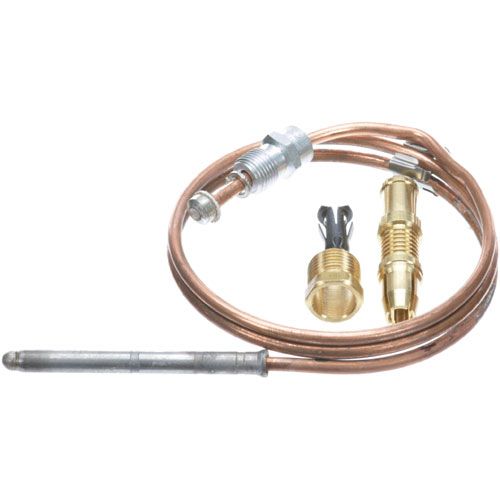
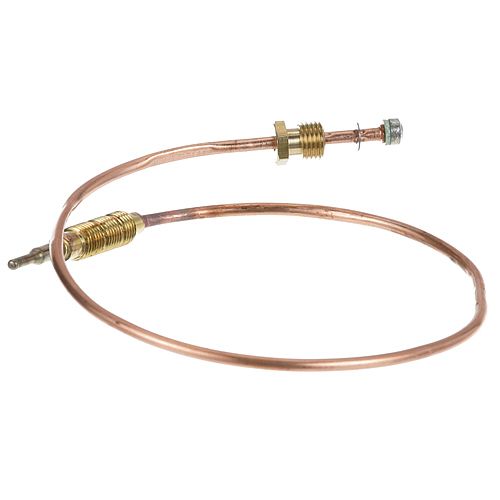
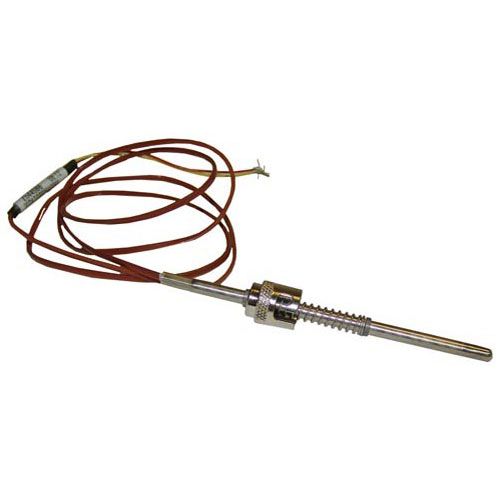
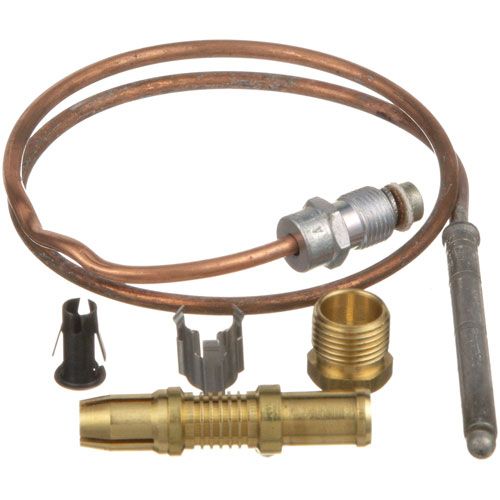
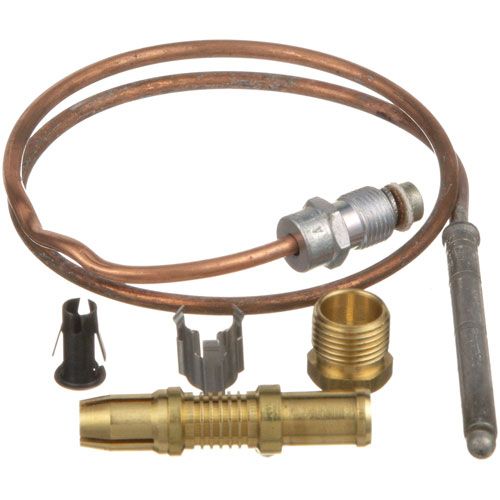
A thermocouple is a temperature-sensing device made by joining two different metals that produce a voltage corresponding to temperature. In commercial kitchens, appliances like ovens, fryers, grills, and boilers rely on thermostats for commercial equipment alongside thermocouples to ensure precise temperature control. These devices are essential for maintaining safety, consistency, and efficient performance in high-demand kitchen environments.
Why Thermocouples Matter in Commercial Appliances:
-
Gas Ovens & Ranges: The thermocouple monitors flame presence to prevent gas leaks and unsafe operation.
-
Commercial Water Heaters & Boilers: Temperature is continuously checked to avoid overheating and protect tanks and piping.
-
Fryers & Grills: Cooking temperatures are regulated to maintain appliance longevity and food quality.
-
Steamers & Pressure Equipment: Temperature monitoring prevents excess pressure buildup and potential hazards.
-
Commercial Dishwashers: Water temperature is controlled to ensure proper cleaning without damaging heating elements.
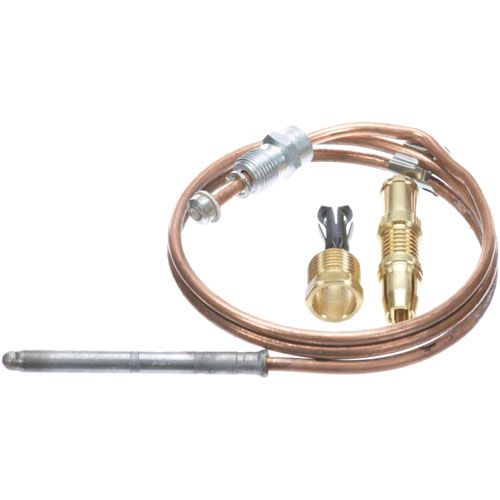
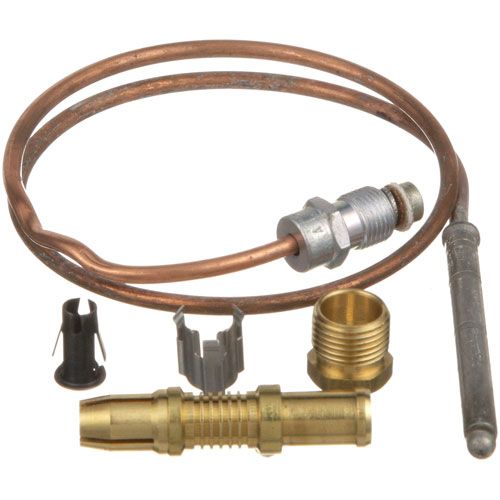
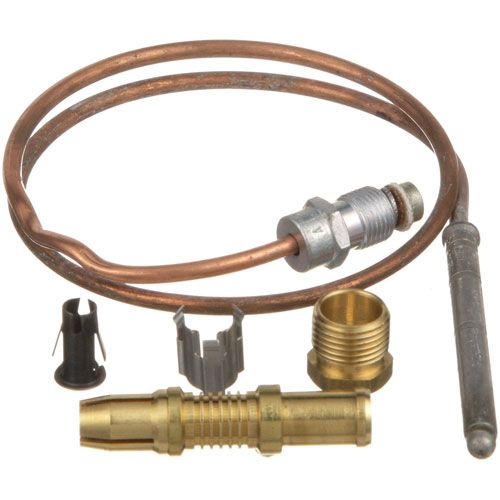
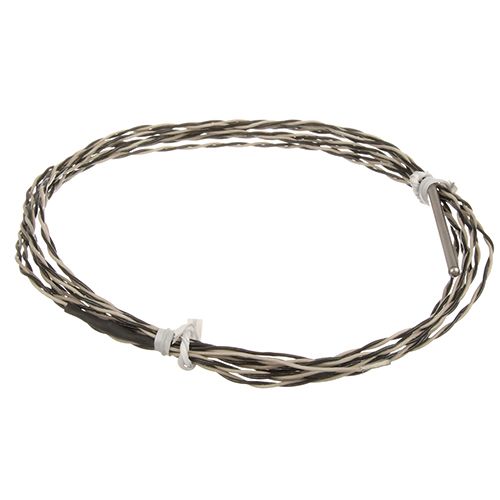
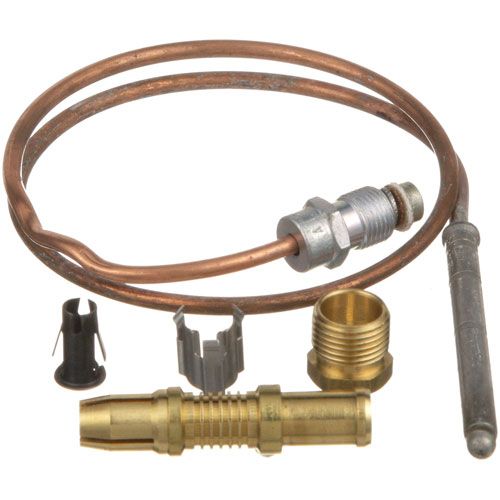
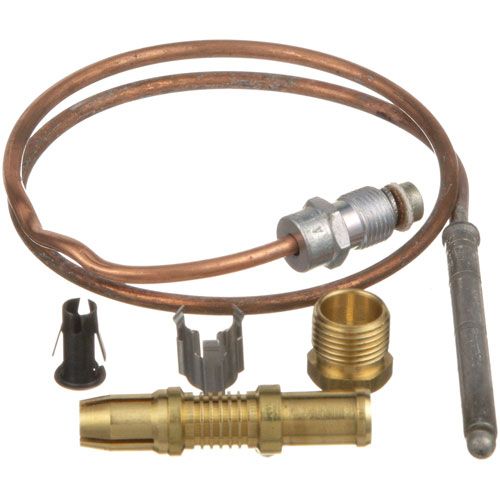
Looking for thermocouple replacement parts for your commercial equipment? At PartsFe, we offer parts for fryer thermocouples, stainless steel thermocouple kits, and thermocouple probe assemblies from leading brands like Imperial, Blodgett, and Pitco, ensuring precision, safety, and efficiency for flawless performance every shift.
Where Is a Thermocouple Located in Ovens, Fryers, and Grills?
A thermocouple is typically located near the burner or heating element, where it can accurately sense temperature changes. In ovens, it’s found close to the pilot light or main burner assembly. In fryers, the thermocouple sits just above the burner tube or near the thermostat bulb to monitor oil temperature. For grills, it’s usually positioned next to the burner or flame area to ensure safe ignition and consistent heat control. Its placement allows it to detect when the pilot flame is out, sending a signal to shut off the gas supply and prevent potential hazards.
How Does a Thermocouple Work: The Science Behind Heat Sensing
Commercial kitchen appliances rely on thermocouples to “sense” heat accurately. Using the Seebeck effect, these sensors turn temperature differences into electrical signals, ensuring precise operation under high-demand conditions.
The Science Behind Heat Sensing:
-
Hot Junction: Two different metals are joined at one end and exposed to the appliance’s heat source (oven burner, fryer oil, or boiler water).
-
Cold Junction: The other ends are kept at a reference temperature for comparison.
-
Voltage Generation: Heat at the hot junction causes electrons to move differently in each metal, producing a voltage proportional to the temperature difference.
-
Signal Interpretation: The appliance reads this voltage to determine exact temperatures in real time.
-
Rapid Response: Any change in heat is immediately reflected in the voltage, allowing instant adjustments to maintain consistent cooking temperatures.
-
Durability in High-Heat Environments: Thermocouples withstand extreme temperatures and repeated thermal cycling, making them ideal for ovens and fryers.
-
Calibration Flexibility: Can be calibrated for high precision, which is critical for consistent food quality.
Explore how true beverage coolers outperform the competition and lead the market in performance, durability, and energy efficiency.
Different Types of Thermocouples and Their Temperature Ranges
Understanding the different thermocouple types and ranges is crucial for selecting the right one for accurate temperature control in various industrial and commercial applications.
|
Thermocouple Type |
Temperature Range |
Commercial Kitchen Appliances |
|
Type K |
-200°C to 1,260°C / -328°F to 2,300°F |
Ovens, fryers, grills |
|
Type J |
-40°C to 750°C / -40°F to 1,382°F |
Steamers, dishwashers, and hot water appliances |
|
Type T |
-200°C to 350°C / -328°F to 662°F |
Refrigeration units, low-heat water heaters |
|
Type B |
0°C to 1,820°C / 32°F to 3,308°F |
Extremely high-heat ovens, commercial broilers |
|
Type E |
-200°C to 900°C / -328°F to 1,652°F |
Bain-maries, warming cabinets |
|
Type N |
-200°C to 1,300°C / -328°F to 2,372°F |
High-performance ovens, fryers |
|
Type R |
-50°C to 1,768°C / -58°F to 3,214°F |
High-end ovens, specialty baking equipment |
Selecting the right thermocouple type ensures accurate temperature control, consistent cooking results, and safe operation across all commercial kitchen appliances.
Safety and Reliability: Are Thermocouples Safe for Restaurant Equipment?
Safety and reliability are essential when operating restaurant equipment. Thermocouples are widely used because they accurately measure temperature while ensuring appliances function safely and consistently.
Why Thermocouples Are Safe for Restaurant Equipment
-
No High-Voltage Risk: Thermocouples produce only a small voltage, reducing electrical hazards.Automatic Shutdown: Many appliances stop heating if unsafe temperatures are detected, preventing fires or damage.
-
Durable Construction: Made from robust metals that tolerate heat, steam, and repeated cycles.
-
Non-Intrusive: Thermocouples don’t interfere with food or appliance operation.
-
Low Maintenance: Rarely requires replacement or recalibration, lowering the chance of failure.
Why Thermocouples Are Reliable
-
Fast Response: React instantly to temperature changes for consistent cooking.
-
Wide Temperature Coverage: Suitable for everything from refrigeration to high-heat ovens.
-
Accurate Readings: Ensure precise temperature control, critical for food safety and quality.
-
Long Lifespan: Withstands harsh kitchen conditions without degrading.
-
Versatile: Compatible with many types of restaurant appliances.
How to Identify a Faulty Thermocouple: Signs and Symptoms
Recognizing thermocouple failure symptoms is crucial for maintaining safe and efficient commercial kitchen equipment. Early detection of issues helps prevent downtime and ensures consistent temperature control.
-
Ovens & Ranges: Pilot light won’t stay lit, uneven cooking, oven fails to reach set temperature, delayed ignition, burner flickering
-
Fryers: Oil doesn’t heat properly, temperature fluctuates, fryer shuts off unexpectedly, burner ignition issues, unusual noises from the unit
-
Grills & Griddles: Flickering flames, uneven heat distribution, difficulty igniting burners, hot spots or cold spots on the cooking surface, flame goes out unexpectedly
-
Steam Equipment & Boilers: Slow steam production, erratic temperature control, burners cycling on and off, water not heating evenly, strange noises or hissing from the unit
Explore the future of frying: ventless commercial deep fryers to find their impact on kitchen efficiency. Learn how they improve safety and reduce energy costs.
Step-by-Step Process: How to Replace a Thermocouple Safely
Proper thermocouple replacement is critical for maintaining safe, efficient, and reliable kitchen equipment. Following a structured approach minimizes risk and ensures optimal performance.
Step 1: Isolate and Power Down Equipment
Turn off the electrical power and close the gas supply at the main valve. Use lockout/tagout procedures in commercial settings to prevent accidental activation.
Step 2: Allow the Equipment to Cool
Ensure ovens, fryers, or water heaters are fully cooled before handling. Wear protective gloves to avoid burns while touching components.
Step 3: Document the Existing Setup
Record the orientation, wiring, and mounting of the old thermocouple. Take photos or notes to guide the accurate installation of the replacement.
Step 4: Remove the Faulty Thermocouple
Carefully disconnect screws or connectors without bending wires or damaging adjacent parts. Handle the thermocouple gently to protect surrounding components.
Step 5: Inspect and Clean Connections
Check burner, flame sensor, and wiring terminals for corrosion, soot, or looseness. Clean or tighten connections before installing the new thermocouple.
Step 6: Install the New Thermocouple
Position the tip correctly near the heat source and reconnect wires securely. Ensure alignment mirrors the original setup for accurate readings.
Step 7: Conduct Functional Testing
Restore power and gas, light the equipment, and verify stable flame and correct temperature readings. Monitor for any irregularities or error codes.
Step 8: Record Maintenance
Log the replacement date, thermocouple type, and observations. Proper documentation supports safety protocols and equipment reliability.
Following these professional steps ensures a safe, precise, and long-lasting thermocouple replacement, maintaining consistent kitchen performance.
Thermocouple Replacement Cost in Commercial Kitchen Appliances
The thermocouple replacement cost in commercial kitchen appliances can vary depending on the equipment. Timely replacement ensures optimal performance and prevents unexpected breakdowns.
|
Equipment Type |
Thermocouple Cost (USD) |
Installation Cost (USD) |
Total Estimated Cost (USD) |
|
Ovens |
$20 – $50 |
$50 – $100 |
$70 – $150 |
|
Fryers |
$25 – $55 |
$60 – $120 |
$85 – $175 |
|
Water Heaters / Steamers |
$15 – $45 |
$50 – $100 |
$65 – $145 |
|
Grills / Salamanders |
$30 – $60 |
$60 – $120 |
$90 – $180 |
|
Bain-Maries / Warming Cabinets |
$20 – $50 |
$50 – $100 |
$70 – $150 |
How to Clean and Maintain a Thermocouple for Longer Lifespan
Proper cleaning and maintenance of thermocouples ensures accurate readings and safe operation. Neglecting them can lead to inconsistent cooking, safety hazards, and costly replacements
-
Inspect Flame or Heating Element Sensors: In gas ovens and fryers, check that the thermocouple tip near the burner is free from soot, grease, or food residue that can affect flame detection.
-
Remove Oil and Grease Deposits: Fryers, grills, and ovens accumulate oil splashes; gently clean the thermocouple tip and nearby wiring to prevent inaccurate readings.
-
Check Immersion Sensors: For water heaters and steamers, ensure the thermocouple tip is free of mineral buildup or scale that can impair heat sensing.
-
Verify Alignment in Warming Cabinets and Bain-Maries: Proper tip placement ensures consistent heat monitoring across trays and prevents overheating or underheating.
-
Secure Electrical Connections: In high-vibration equipment like mixers or convection ovens, ensure wires are firmly connected to avoid intermittent readings or auto-shutdowns.
-
Monitor Temperature Fluctuations: Frequent variations in ovens or fryers may indicate a partially clogged or misaligned thermocouple needing cleaning or repositioning.
-
Protect from Direct Food Contact: Avoid placing the thermocouple directly in liquids or food unless designed for immersion.
Focused maintenance ensures accurate temperature control, safe operation, and prolonged equipment life.
Achieving Consistent Cooking and Equipment Efficiency with Thermocouples
Thermocouples are the silent workhorses behind precise temperature control in commercial kitchens. They ensure every dish is cooked evenly while protecting equipment from overheating or failure. Understanding their role helps staff maintain smooth, reliable, and efficient kitchen operations.
Key Takeaways:
-
Accurate thermocouple readings ensure consistent cooking and high food quality.
-
Proper placement prevents hot or cold spots and uneven heating.
-
Early detection of wear or buildup avoids equipment malfunctions.
-
Consistent temperature control reduces energy use and lowers costs.
-
Functioning thermocouples extend appliance lifespan and reliability.
-
Reliable readings enhance kitchen safety and regulatory compliance.
-
Thermocouples enable predictable cooking, improving workflow efficiency.
Monitoring and understanding thermocouples allows kitchens to maintain safe, consistent, and efficient operations. Correct use and early fault detection minimize errors and downtime. Ultimately, thermocouples are essential for achieving reliable cooking performance and maximizing equipment efficiency.
FAQs
How do I know if my thermocouple is J or K?
Check the equipment manual or look for color-coded wires—Type J usually has black and white wires, while Type K has yellow and red. You can also measure the voltage output at a known temperature to confirm the type.
What does a thermopile do in a fryer?
A thermopile converts heat from the pilot flame into an electrical signal to keep the gas valve open. It ensures the fryer operates safely by shutting off gas if the flame goes out.
How do I test an oven thermocouple?
Use a multimeter to measure the millivolt output while the thermocouple is heated by the pilot flame. If the voltage is below specifications, the thermocouple may be faulty and need replacement.
How do I change a thermocouple on a commercial fryer?
Turn off the gas and power before loosening the thermocouple connections at the gas valve and burner. Remove the old thermocouple and install a new one in the same position, ensuring proper alignment with the pilot flame.