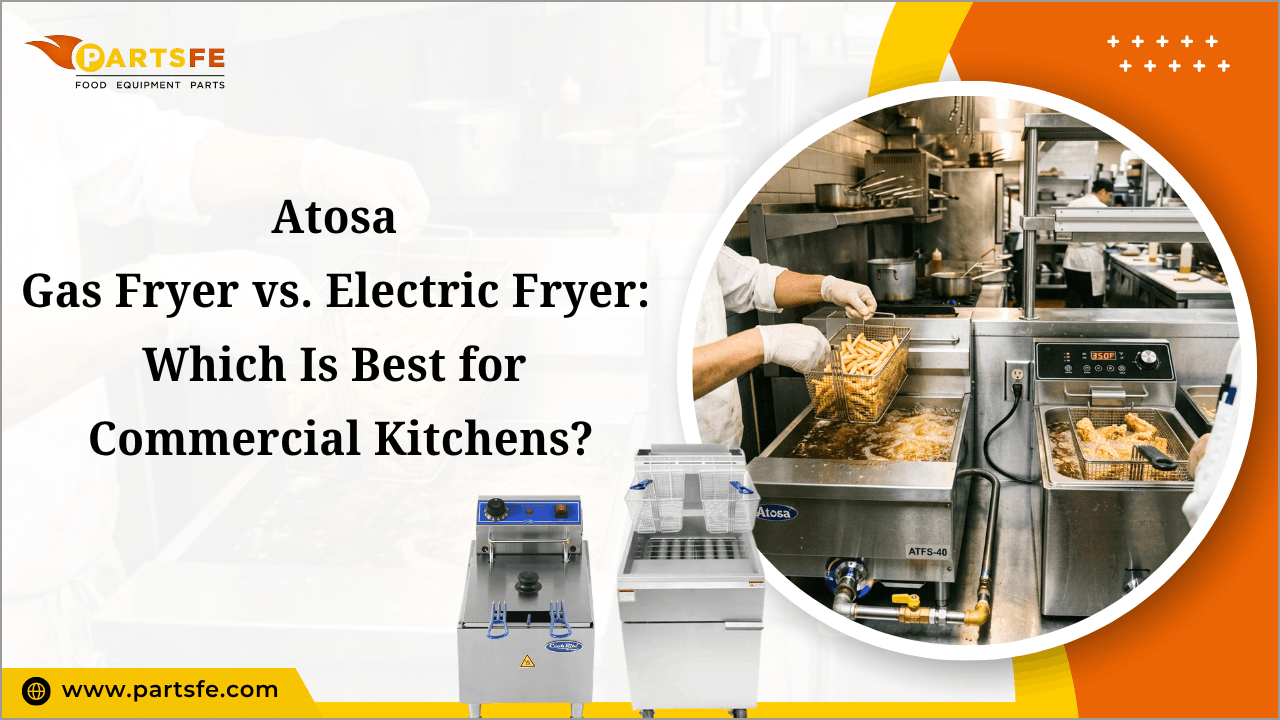
Atosa Gas Fryer vs Electric Fryer: Which Is Best for Commercial Kitchens?
Choosing the right fryer is important for maintaining speed, food quality, and efficiency in commercial kitchens. Many restaurant owners compare gas and electric fryers to find the best option for their cooking needs, kitchen setup, and operating costs. Atosa fryers are widely used in restaurants, food trucks, cafes, and catering businesses because they offer reliable frying performance and durable construction for high-volume cooking environments.
Atosa gas fryers are known for fast heat recovery and high cooking power, making them suitable for busy kitchens with continuous frying demands. On the other hand, Atosa electric fryers provide precise temperature control, energy efficiency, and easier installation in locations without gas connections. Understanding how these fryer types differ, along with maintaining them using essential fryer replacement parts, can help businesses make a more informed decision when upgrading equipment or planning a new commercial kitchen.
In this article, we will compare Atosa gas fryers and electric fryers based on performance, energy usage, maintenance, installation, and overall suitability for commercial kitchens. This comparison will help restaurant operators choose the best fryer solution for efficient and consistent food preparation.
Atosa Gas Fryers: Features, Benefits & Best Applications
Atosa gas fryers are built to deliver reliable heating performance, fast temperature recovery, and consistent frying results for commercial cooking operations. Their heavy-duty construction and efficient burner systems help support a smooth kitchen workflow while handling continuous cooking demands during busy service hours.
Features of Atosa Gas Fryers
Atosa gas fryers include several features designed to improve commercial kitchen efficiency, such as:
-
Stainless-steel construction for durability
-
Fast heating and quick temperature recovery
-
Large-capacity oil tanks
-
Adjustable temperature controls
-
High-performance gas burners
-
Easy oil draining and cleaning systems
These features help maintain steady frying performance and support faster food preparation.
Benefits of Atosa Gas Fryers
Gas fryers provide strong and consistent heat, which helps maintain cooking quality even during heavy use. Their rapid heat recovery also helps reduce waiting time between cooking batches.
Additional benefits include:
-
Faster cooking response
-
Reliable performance during peak hours
-
Efficient handling of large food quantities
-
Consistent oil temperature maintenance
-
Suitable for continuous frying operations
These advantages help improve kitchen productivity and cooking efficiency.
Best Applications for Atosa Gas Fryers
Atosa gas fryers are well-suited for businesses that handle frequent frying tasks throughout the day, including:
-
Quick-service restaurants
-
Fried food establishments
-
Busy commercial kitchens
-
Bars and casual dining restaurants
-
High-volume food preparation areas
These fryers are especially useful in kitchens where speed, efficiency, and consistent frying performance are essential.
Atosa Electric Fryers: Features, Benefits & Best Applications
Atosa electric fryers are designed to provide consistent frying performance, accurate temperature control, and efficient operation for commercial kitchens. Their compact design and easy installation make them a practical option for businesses looking for reliable frying equipment with smooth day-to-day operation.
Features of Atosa Electric Fryers
Atosa electric fryers are built with features that support controlled cooking performance and kitchen convenience, including:
-
Durable stainless-steel construction
-
Precise temperature control systems
-
Compact and space-saving designs
-
Easy-to-clean fryer tanks
-
Simple operation and maintenance features
These features help improve cooking consistency while supporting efficient kitchen workflow.
Benefits of Atosa Electric Fryers
Electric fryers are known for maintaining stable cooking temperatures, which helps produce consistent frying results. They also operate with reduced heat output, helping create a more comfortable kitchen environment.
Additional benefits include:
-
Accurate temperature regulation
-
Quiet and smooth operation
-
Easier installation compared to gas models
-
Reduced heat release into the kitchen
-
Suitable for controlled frying applications
These advantages make electric fryers a dependable option for kitchens focused on efficiency and consistency.
Best Applications for Atosa Electric Fryers
Atosa electric fryers are commonly suitable for:
-
Moderate-volume frying operations
-
Commercial kitchens with limited gas access
-
Compact kitchen spaces
-
Controlled cooking environments
-
Businesses requiring easy equipment installation
They are especially useful for kitchens that prioritize convenience, stable cooking performance, and efficient space management.
Discover The Ultimate Buying Guide to Choose the Best Commercial Deep Fryer to understand key factors, compare options, and select the right fryer for efficient kitchen performance.
Atosa Gas Fryer vs Electric Fryer: Key Differences Compared
Atosa gas and electric fryers both support commercial kitchen operations, but they differ in heating performance, installation, temperature control, and maintenance requirements. The right option depends on cooking volume, kitchen setup, and operational needs.
The table below compares the key differences between Atosa gas fryers and electric fryers.
|
Feature |
Atosa Gas Fryer |
Atosa Electric Fryer |
|
Heating Speed |
Heats oil in 8–10 minutes |
Heats oil in 12–15 minutes |
|
Temperature Control |
±10°F temperature variation |
±3°F temperature variation |
|
Energy Source |
Uses natural gas or propane |
Uses 208V–240V electricity |
|
Oil Capacity |
35–75 lb oil capacity |
15–50 lb oil capacity |
|
Cooking Capacity |
Fries 40–70 lbs per hour |
Fries 20–45 lbs per hour |
|
Heat Output |
Produces more kitchen heat |
Releases less surrounding heat |
|
Operating Cost |
Lower long-term fuel cost |
Higher electricity usage cost |
|
Maintenance |
Burner cleaning every 3–6 months |
Heating element checks every 6–12 months |
|
Best Use Case |
Ideal for busy restaurants |
Best for small kitchens and cafes |
Both fryer types provide dependable commercial frying performance. Choosing the right fryer depends on kitchen space, cooking demand, energy setup, and maintenance preferences.
Atosa Commercial Fryers Maintenance, Safety & Installation Considerations
Proper maintenance, safe handling, and correct installation are essential for keeping Atosa commercial fryers operating efficiently. Regular care helps improve cooking performance, reduce equipment problems, and support a safer working environment in commercial kitchens.
Maintenance Considerations: Regular fryer cleaning and inspections help prevent grease buildup and performance issues. Proper maintenance can also reduce unexpected downtime.
Common maintenance practices include:
-
Cleaning fryer tanks and baskets regularly
-
Filtering or replacing cooking oil when needed
-
Inspecting burners or heating elements
-
Checking temperature control performance
-
Removing grease buildup around the unit
-
Monitoring fryer components for damage or wear
Consistent maintenance helps improve efficiency and supports smoother kitchen operations.
Safety Considerations: Commercial fryers operate at high temperatures, so following proper safety practices is important for preventing accidents and maintaining a safe kitchen environment.
Important fryer safety practices include:
-
Avoid overfilling the fryer with oil
-
Keep water away from hot cooking oil
-
Maintain proper ventilation around the fryer
-
Allow the fryer to cool before cleaning
-
Use protective equipment during maintenance
-
Monitor fryer temperatures during operation
Following proper safety procedures can help create a safer and more organized kitchen environment.
Installation Considerations: Correct fryer installation supports safe and efficient operation. Gas and electric fryers require different utility connections and kitchen setups.
Important installation factors include:
-
Available kitchen space
-
Gas or electrical connection requirements
-
Ventilation system compatibility
-
Safe equipment placement
-
Accessibility for cleaning and maintenance
-
Compliance with local kitchen regulations
Proper installation and regular upkeep can help Atosa commercial fryers deliver reliable long-term performance in commercial kitchens.
Find out How to Troubleshoot and Replace Commercial Fryer Thermocouples Like a Pro to understand common issues and fixing methods.
Summary: Which Atosa Fryer Is Right for Your Commercial Kitchen?
Selecting the right Atosa fryer depends on your commercial kitchen’s cooking requirements, available space, and preferred energy source. Gas fryers are often a better option for kitchens that need fast heating and continuous frying performance, while electric fryers are suitable for businesses that prefer controlled cooking and simple installation.
Both Atosa gas and electric fryers are designed to support efficient commercial kitchen operations. By comparing factors such as cooking volume, maintenance needs, kitchen setup, and overall workflow, businesses can choose the fryer that best fits their daily operational needs.
Key Takeaways
-
Atosa gas fryers offer quick heating and strong frying performance
-
Atosa electric fryers provide consistent temperature control
-
Gas fryers are suitable for high-volume cooking operations
-
Electric fryers work well for moderate frying needs
-
Regular maintenance helps improve fryer efficiency and lifespan
-
Proper installation supports safe and reliable kitchen operation
Shop high-quality commercial kitchen equipment parts at PartsFe to keep your Atosa gas and electric fryers running efficiently. Find quality replacement parts like heating elements, thermostats, burners, and baskets for consistent performance, reduced downtime, and longer equipment life.
FAQs
Are Atosa electric fryers more energy efficient than gas fryers?
Yes, Atosa electric fryers are often energy efficient because they transfer heat directly to the oil and produce less excess heat in commercial kitchens.
Do Atosa gas fryers heat up faster than electric fryers?
Yes, Atosa gas fryers typically heat oil faster and recover temperature quickly, making them suitable for busy commercial kitchens with continuous frying operations.
What type of commercial kitchen should use an Atosa electric fryer?
Atosa electric fryers are ideal for smaller commercial kitchens needing stable temperature control, easier installation, and moderate frying capacity without gas line requirements.
How much does it cost to operate an Atosa gas fryer vs electric fryer?
Operating costs depend on local gas and electricity rates, fryer usage, kitchen size, and overall cooking volume in commercial foodservice operations.
|
Disclaimer: This blog is for informational purposes only and provides general information about Atosa gas and electric fryers. Performance, installation, and operating requirements may vary based on kitchen setup and usage. |